





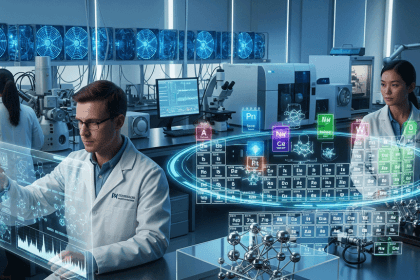
Element engineering is emerging as one of the most ambitious frontiers in modern science. Instead of only using materials as nature provides them, researchers are increasingly learning how to tune atomic structure, isotopic composition, and nanoscale arrangements to produce specific properties. In practical terms, this means the future of science may depend less on discovering the right material by chance, and more on designing one deliberately.
That shift matters because many of today’s biggest challenges, including clean energy, advanced computing, precision medicine, and sustainable manufacturing, are limited by material performance. This article explores what element engineering really means, what is realistically coming next, where the biggest opportunities are, and what barriers still stand in the way.
What Is Element Engineering?
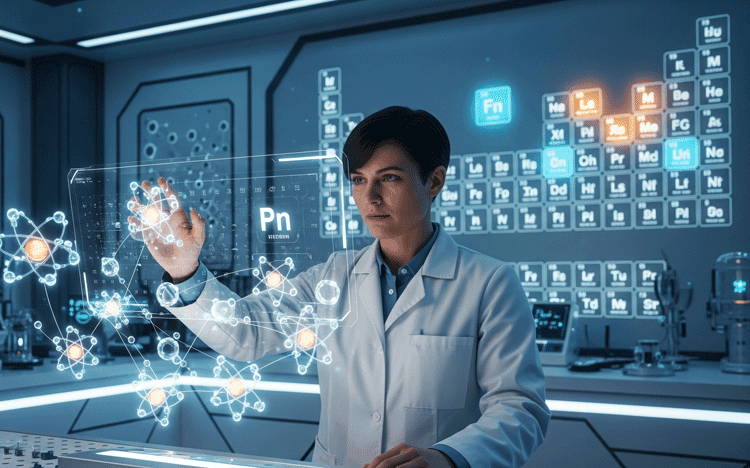
Element engineering is the science and engineering of modifying matter at the atomic and subatomic level to achieve useful properties. This does not always mean creating brand-new chemical elements. In most real-world cases, it means:
- Isotopic engineering (changing isotope ratios for specific behavior)
- Atomic-scale doping (adding trace elements to alter conductivity or strength)
- Crystal and lattice engineering (controlling how atoms are arranged)
- Nuclear synthesis research (creating superheavy elements in labs)
- Materials-by-design approaches using AI and simulation
In other words, the field sits at the intersection of nuclear physics, chemistry, materials science, and computational modeling. The long-term vision is powerful: define the property first, then design the material system that delivers it.
This is why element engineering matters now. We are pushing existing materials close to their limits in batteries, semiconductors, aerospace systems, and catalysts. Incremental improvements are still possible, but future breakthroughs will increasingly come from atomic-level control.
From Alchemy to Atomic Precision
Humanity has long dreamed of transforming matter. Ancient alchemists tried to convert base metals into gold without understanding atomic structure. Modern science replaced myth with measurable physics, and today we can genuinely change one element into another through nuclear reactions, although not in a practical, low-cost way for everyday use.
That historical arc matters because it shows how the goal evolved. The real objective today is not “alchemy” in the old sense. It is precision control over atomic behavior for useful outcomes, such as better energy storage, targeted medical isotopes, radiation-resistant alloys, and improved semiconductor materials.
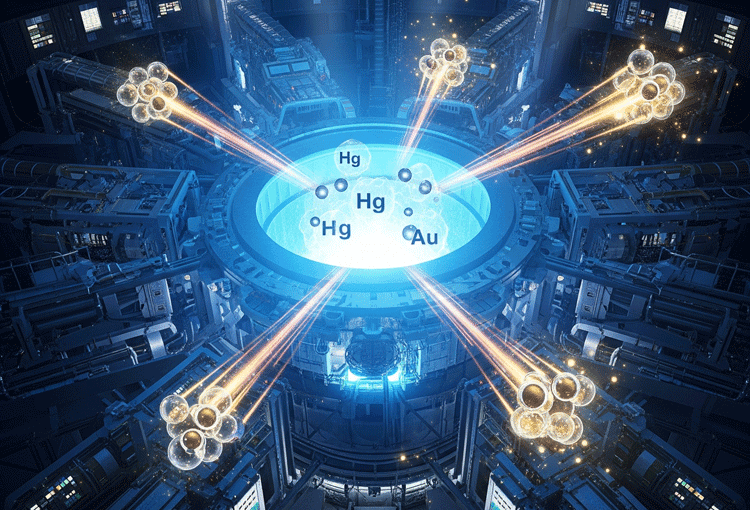
If you want a related example of atomic transmutation in modern science, see our article on mercury into gold through nuclear fusion. It is scientifically interesting, but it also shows why “possible” and “practical” are very different things.
What has changed in recent years is computational power. Researchers can now simulate atomic interactions, test hypothetical structures, and screen massive design spaces before running expensive experiments. This makes element engineering more strategic and less trial-and-error.
What Is Coming Next in Element Engineering?
The next phase of element engineering will likely be driven by targeted improvements in existing material systems, not a sudden flood of brand-new stable elements. The biggest near- and mid-term advances are expected in engineered isotopes, advanced composites, catalysts, and semiconductor materials.
Here are the areas to watch most closely.
1. Clean Energy Materials and Isotopes
Energy systems are one of the strongest use cases for element engineering. Researchers are developing better battery materials, more efficient catalysts for hydrogen production, and advanced alloys for extreme reactor environments. In fusion and fission-related research, isotope selection and materials behavior under radiation are especially important.
The realistic opportunity here is not “magic fuel,” but improved performance through atomic-level tuning: better conductivity, higher durability, lower degradation, and safer operation under stress.
2. Next-Generation Electronics Beyond Conventional Scaling
As traditional semiconductor scaling becomes more difficult, materials innovation becomes a bigger lever. Element engineering can help by enabling better interconnects, lower-loss materials, improved thermal management, and specialized semiconductors for AI, sensing, and power electronics.
This does not mean silicon disappears overnight. It means future electronics will increasingly depend on hybrid material stacks, atomic-scale doping strategies, and carefully engineered interfaces that improve efficiency and performance.
3. Precision Medical Isotopes and Therapeutics
Medicine is another major growth area. Engineered isotopes with suitable half-lives and decay properties can improve imaging and targeted therapies. The goal is higher precision, less collateral damage to healthy tissue, and better treatment timing.
This is one of the most practical and socially valuable applications of element engineering because even incremental improvements can translate into better outcomes in oncology, diagnostics, and personalized treatment systems.
4. Space and Extreme-Environment Materials
Space systems, advanced aviation, and high-radiation environments require materials that are light, heat-resistant, corrosion-resistant, and structurally stable over long missions. Atomic-level material tuning can improve performance in ways conventional alloy design cannot always achieve.
As lunar infrastructure, deep-space missions, and high-performance robotics expand, demand for extreme-environment materials will grow, and element engineering will become more strategically important.
5. Greener Catalysts and Industrial Chemistry
Industrial chemistry depends heavily on catalysts, and small atomic changes can produce large performance differences. Element engineering can help create catalysts that use less energy, reduce waste, and improve selectivity in chemical reactions.
This has major implications for hydrogen production, emissions reduction, carbon utilization, fertilizers, and cleaner manufacturing. In many cases, the environmental benefit comes from efficiency gains rather than a dramatic headline breakthrough.
What AI Changes in Element Engineering
Artificial intelligence is becoming a force multiplier in element and materials engineering because it can search chemical and structural possibilities far faster than manual methods. Instead of testing one candidate at a time, researchers can use AI models to rank promising options before laboratory validation.
In practice, AI helps with:
- Predicting material properties from atomic structure
- Reducing experimental trial-and-error
- Identifying patterns in failed experiments
- Optimizing synthesis pathways and processing conditions
- Accelerating design cycles for high-value applications
This does not replace experimental science. It reduces search cost and improves decision quality. The lab remains the final test, but AI makes it easier to decide what deserves lab time.
The Biggest Challenges We Still Need to Solve
Element engineering is promising, but the field is constrained by hard physics, high cost, and long development timelines. Progress will continue, but it will not be smooth or instant.
1. Stability and Usability
Many exotic or newly synthesized elements are highly unstable and decay too quickly for practical use. This is why most near-term innovation will come from engineering known elements, isotopes, and material structures rather than adding many useful new boxes to the periodic table.
2. Extreme Cost and Infrastructure Requirements
Atomic-scale and nuclear-scale experiments often require specialized facilities, advanced instruments, and highly trained teams. This makes research expensive and slows commercialization, even when the science is promising.
3. Scale-Up Risk
A material that works in a lab sample may fail economically or technically at industrial scale. Manufacturing consistency, impurity control, yield rates, and supply chain constraints can block adoption long after a scientific breakthrough is announced.
4. Safety, Security, and Governance
Some engineered isotopes and advanced materials may raise dual-use concerns or safety risks. Standards for testing, handling, disclosure, and regulation will need to evolve as capabilities expand. Scientific progress without governance can create avoidable risks.
5. Hype vs. Reality
Because element engineering sounds futuristic, it attracts exaggerated claims. The most useful progress in the next decade will likely come from targeted improvements in catalysts, semiconductors, medical isotopes, and high-performance materials, not science-fiction-style instant material creation.
Future Outlook: From Material Discovery to Material Design
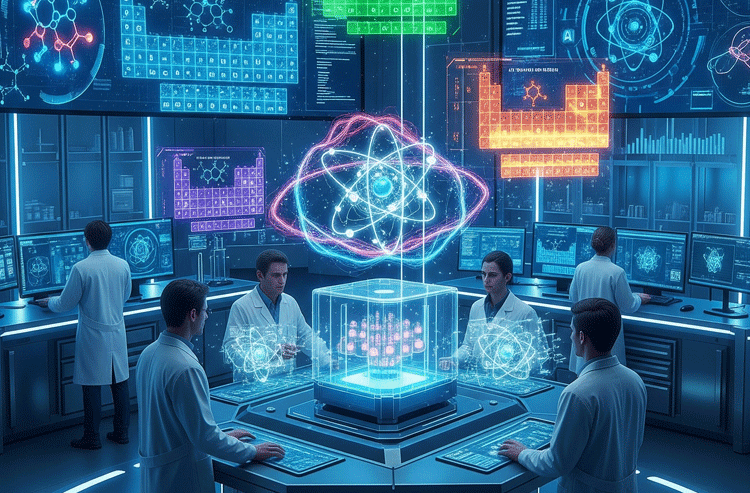
The long-term direction is clear. Science is moving from a discovery-first model toward a design-first model. Instead of asking only what materials exist, researchers increasingly ask what properties are needed and how atomic composition and structure can be engineered to deliver them.
That shift could reshape multiple industries. Over time, element engineering may support:
- Batteries with better cycle life, faster charging, and lower degradation
- Implants and biomaterials designed for controlled degradation or long-term compatibility
- Ultra-sensitive sensors for health monitoring and environmental detection
- More efficient catalysts for cleaner industrial processes
- Advanced materials for energy systems, aerospace, and AI hardware
Some of these advances will arrive as quiet performance gains rather than dramatic public breakthroughs. That is still a major transformation. In science and engineering, steady improvements in foundational materials often create the biggest long-term impact.
What the periodic table did for earlier generations was organize matter. What element engineering may do for the coming decades is make matter programmable at a practical level, within the limits of physics and economics.
Conclusion: What Comes Next?
Element engineering is not about replacing chemistry or rewriting nature overnight. It is about gaining finer control over matter, then using that control to solve real problems in energy, medicine, computing, and manufacturing.
The next phase will likely be defined by AI-assisted design, isotope optimization, better catalysts, and advanced materials engineered for extreme performance. The field is still early, expensive, and technically demanding, but its direction is credible and strategically important.
Element by element, structure by structure, science is moving toward a future where materials are increasingly designed with intent, not just discovered by chance.