





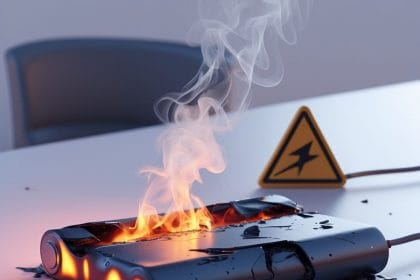
Lithium battery explosions are uncommon, but lithium-ion battery fires are serious because they can develop quickly, release smoke, and spread heat to nearby cells or materials. Phones, laptops, power banks, e-bikes, scooters, drones, cameras, and cordless tools all use compact batteries that store a lot of energy in a small space.
The goal is not to make every device sound dangerous. Most lithium-ion batteries work safely for years. The real goal is to recognize the failure conditions: damage, overheating, overcharging, cheap or incompatible chargers, manufacturing defects, water exposure, and warning signs such as swelling, odor, smoke, or unusual heat.
What People Mean by a Lithium Battery Explosion
When people say a lithium battery “exploded,” they may be describing several different events: a loud pop, a ruptured pouch cell, sudden venting, flames, smoke, or a fast-spreading fire. Not every incident is a movie-style explosion, but the result can still be dangerous.
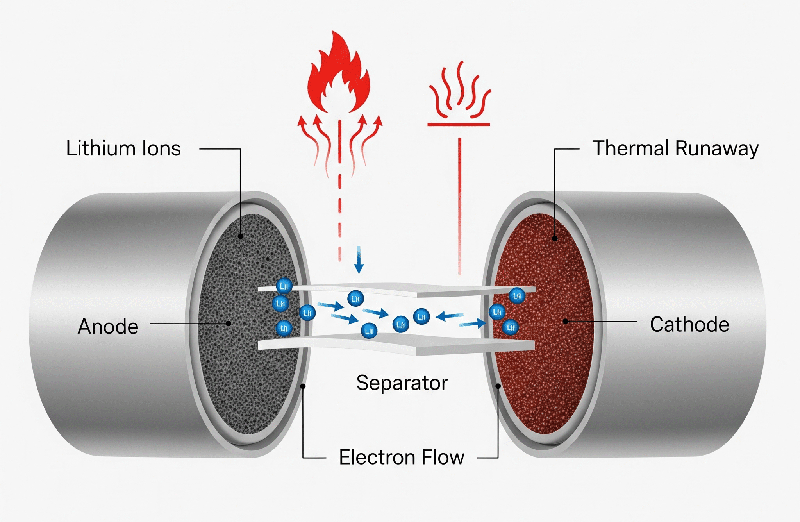
Lithium-ion batteries contain flammable electrolyte and tightly packed internal layers. If those layers are damaged or overheated, an internal short can occur. Once the cell becomes hot enough, chemical breakdown can generate more heat, which accelerates the failure. That is thermal runaway.
Thermal runaway is especially concerning in battery packs because one failing cell can heat nearby cells. This is why large packs in e-bikes, scooters, power stations, and tools need extra care. More energy in the pack can mean a more severe incident if the pack is damaged or poorly made.
The Main Causes of Lithium Battery Fires
Most lithium battery failures are connected to a few repeatable causes. The exact battery chemistry and device design matter, but the risk pattern is similar across many products.
| Cause | What happens inside or around the battery | What to do |
|---|---|---|
| Physical damage | Crushing, puncturing, bending, or dropping can damage separators and create short circuits | Stop using damaged batteries and replace them through the manufacturer or a qualified service provider |
| Overheating | Heat accelerates chemical breakdown and can push a weak cell toward thermal runaway | Keep devices out of hot cars, direct sun, blankets, and enclosed charging spaces |
| Poor charging equipment | Low-quality or incompatible chargers can create abnormal voltage, current, or heat conditions | Use the correct charger, certified accessories, and undamaged cables |
| Manufacturing defect | Internal contamination or flaws may create hidden weak points | Check recalls and stop using recalled batteries or devices |
| Loose spare batteries | Metal objects can bridge terminals and cause short circuits | Store spare batteries in cases, cover terminals, and keep them away from keys or coins |
| Water or flood exposure | Moisture and corrosion can compromise electronics and battery safety systems | Do not charge or reuse water-damaged batteries unless cleared by the manufacturer or a professional |
Thermal Runaway Explained Without the Hype
Thermal runaway is a self-heating failure. A battery cell gets too hot, internal materials begin to break down, that breakdown releases more heat, and the cell becomes even hotter. If the process is not stopped, the battery can vent gas, smoke, ignite, or rupture.
Several triggers can start the process: internal short circuits, external short circuits, overcharge, overheating, physical damage, or manufacturing defects. The FAA’s lithium battery guidance specifically warns that all lithium-ion batteries are capable of overheating and entering thermal runaway under certain conditions.
The practical lesson is simple: heat is a warning sign, not a normal inconvenience. A phone warming slightly during heavy use is common. A device becoming too hot to handle, swelling, hissing, smoking, smelling chemical, or changing shape is not normal.
Warning Signs You Should Not Ignore
Stop using a battery-powered device if you notice any of these signs:
- swelling, bulging, or a lifted screen/back cover
- unusual heat during charging or light use
- smoke, hissing, popping, or crackling sounds
- chemical or burning odor
- leaking fluid or visible corrosion
- repeated shutdowns, sudden battery percentage drops, or failure to charge normally
- damage after a hard drop, crash, puncture, or crushing force
For phone-specific swelling steps, use the separate guide on phone battery swelling and safe handling. A swollen phone battery should not be pressed flat, punctured, charged overnight, or kept in a pocket.
Safe Charging Habits That Actually Matter
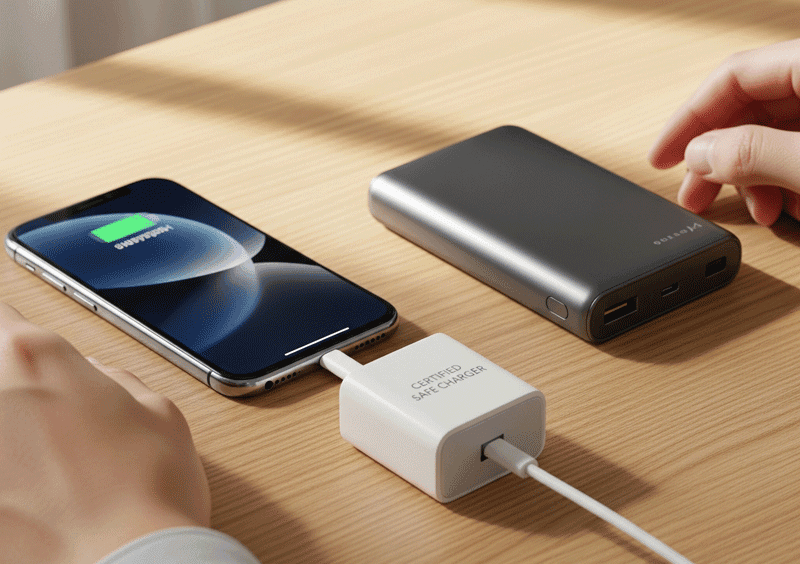
The U.S. Fire Administration advises people to follow product instructions when using, storing, or disposing of lithium-ion batteries. That sounds basic, but it covers the habits that prevent many avoidable incidents.
- Use the right charger: choose original, certified, or manufacturer-recommended chargers and cables.
- Avoid trapped heat: do not charge under pillows, blankets, cushions, or piles of clothing.
- Charge in a visible place: avoid leaving questionable batteries charging unattended for long periods.
- Stop after warning signs: if the device changes shape, smells odd, leaks, smokes, or gets too hot, unplug it if you can do so safely and move away.
- Do not charge damaged batteries: damage after a crash, puncture, or flood should be treated seriously.
- Keep vents clear: laptops, power stations, and chargers need airflow.
Daily battery longevity advice, such as avoiding constant heat and heavy charging loads, also supports safety. For travel-focused battery drain rather than failure risk, see phone battery drain on airplane trips.
E-Bikes, Scooters, and Larger Battery Packs
Small phone batteries can fail, but larger packs deserve extra caution because they contain more stored energy. E-bikes, scooters, power stations, and high-capacity tool batteries should be charged with the manufacturer-approved charger and kept away from exits, beds, and flammable storage areas.
Be careful with used, rebuilt, modified, or uncertified packs. A bargain replacement battery is not a bargain if it lacks proper protection, cell matching, or safety certification. If a battery pack has been in a crash or exposed to water, do not assume it is safe because it still powers on.
What to Do If a Battery Starts Smoking or Burning
If a lithium battery starts smoking, hissing, expanding, or burning, treat it as an emergency. Move away, warn others, and call emergency services if there is fire, heavy smoke, or danger to people or property. Do not pick up a failing battery with bare hands. Do not carry a smoking device through a home if doing so puts you in more danger.
If this happens on an aircraft, notify the flight crew immediately. The FAA says crews are trained to recognize and respond to lithium battery fires in the cabin. Do not hide an overheating power bank or phone in a bag.
After any serious battery incident, do not reuse the device just because it cools down. Arrange proper disposal, recycling, or manufacturer support.
Storage, Travel, and Disposal
For storage, keep lithium-ion batteries at room temperature when possible, away from direct sun, hot cars, and combustible materials. Protect terminals on loose spare batteries so they cannot touch metal objects.
For air travel, the FAA requires spare lithium batteries, including power banks and external battery chargers, to be carried in carry-on baggage only. If a carry-on bag is gate-checked, spare batteries and power banks must be removed and kept with the passenger. Damaged or recalled batteries should not be brought aboard unless made safe under the rules.
For disposal, do not throw lithium-ion batteries in household trash. Use approved battery recycling, e-waste, or local hazardous waste programs. If the battery is damaged, swollen, or overheated, ask your local waste authority how to handle it safely.
How This Article Differs From Our Other Battery Guide
This page focuses on why lithium batteries explode or catch fire: thermal runaway, damage, heat, charging problems, storage, travel, and emergency response.
Our separate guide to lithium-ion battery explosion risks is the better fit if you want more detail on device repair decisions, charging behavior, phone symptoms, and when to replace a battery. Keeping the two pages separate helps avoid repeating the same advice while still linking related safety topics.
Do Not Treat a Battery Fire Like a Normal Gadget Problem
If a lithium battery is hissing, smoking, swelling quickly, sparking, or releasing a chemical smell, the priority is people and surroundings, not saving the device. Move away, avoid breathing fumes, and call local emergency services when there is active fire, spreading smoke, injury, or risk to a building.
- Do not hold it: burns, fumes, and sudden flare-ups can happen quickly.
- Do not puncture it: releasing pressure can make the reaction worse.
- Do not throw it in normal trash: damaged lithium batteries need proper handling.
- Do not argue with warning signs: a device that smells, smokes, or expands needs isolation and professional handling.
This is general battery safety information, not firefighting, repair, shipping, legal, or emergency advice.
- If the battery is inside a computer, use the laptop battery swelling guide.
Bottom Line
Lithium-ion batteries are safe when they are well made, used correctly, charged with suitable equipment, and replaced when damaged or aging. The risk rises when batteries are crushed, overheated, overcharged, flooded, modified, recalled, or ignored after warning signs.
Respect the signs: swelling, heat, odor, smoke, noise, leaking, or sudden performance changes. Stop using questionable batteries, keep spare batteries protected, follow air-travel rules, recycle properly, and get away quickly if a battery begins to smoke or burn.
Sources: U.S. Fire Administration battery fire safety guidance; FAA PackSafe lithium battery guidance; FAA portable electronic devices with batteries guidance.
Explosion Risk vs. Everyday Battery Warning Signs
Most lithium battery problems never turn into an explosion, but warning signs should still be taken seriously. Swelling, hissing, chemical smell, unusual heat, visible damage, or repeated charging failure all deserve a different response than ordinary battery aging.
If the battery is inside a phone and the screen or case is lifting, start with the guide to phone battery swelling. For a broader look at charging, repair, and device-handling risk, see lithium-ion battery explosion risks. If the issue is only standby drain, the article on phone battery drain on airplane mode is the safer troubleshooting path.
Safety note: this article is not a repair manual. A damaged, swollen, smoking, or overheating battery should not be opened or tested at home. Move away from flammable materials if safe and follow local battery disposal or professional repair guidance.
Where Swelling Fits Into Fire Risk
Explosion risk is easier to understand when swelling is treated as an early warning sign instead of a cosmetic defect. For device-specific guidance, compare the response to a swollen phone battery with the steps for power bank swelling. The more detailed lithium-ion battery explosion risks guide explains why repair attempts, poor charging habits, and damaged cells can compound the problem.