






Graphene coating is a protective surface layer that uses graphene, graphene oxide, or graphene-enhanced composites to improve durability, barrier performance, corrosion resistance, conductivity, or surface strength. The idea is attractive because graphene is extremely thin, strong, chemically stable, and difficult for many gases and liquids to pass through.
That does not mean every product labeled “graphene coating” is automatically superior. Graphene is not a magic shield. Coating performance depends on how the graphene is made, how it is dispersed, how it bonds to the base material, whether it has defects, and what kind of environment the coated surface will face.
This guide explains how graphene coating works, where it is useful, where claims are often exaggerated, and how to judge a coating product before trusting it on a car, device, marine part, building material, or industrial surface.
What Is Graphene Coating?
Graphene is a one-atom-thick sheet of carbon atoms arranged in a two-dimensional lattice. In coatings, the term usually does not mean a perfect single atomic sheet covering an entire object. Commercial and experimental coatings may use graphene nanoplatelets, graphene oxide, reduced graphene oxide, multilayer graphene, or graphene blended into polymers, ceramics, paints, resins, and sealants.
The practical goal is simple: add a thin, durable barrier that slows damage. Depending on the formulation, a graphene coating may try to reduce corrosion, repel water, improve scratch resistance, improve heat spreading, reduce friction, block oxygen and moisture, or protect paint from environmental wear.
For a broader introduction to the material itself, see what graphene is.
How Graphene Coating Works
A coating protects a surface mainly by forming a barrier between the material and the environment. Graphene can strengthen that barrier because well-dispersed graphene sheets create a more difficult path. Water, oxygen, salt, and other corrosive agents have a harder time traveling directly through the coating.
Graphene can also improve mechanical behavior. In a polymer coating, graphene platelets may reinforce the matrix and reduce cracking if they are dispersed properly. In electronics, graphene’s thermal and electrical properties may be useful when the coating must move heat or charge rather than simply insulate a surface.
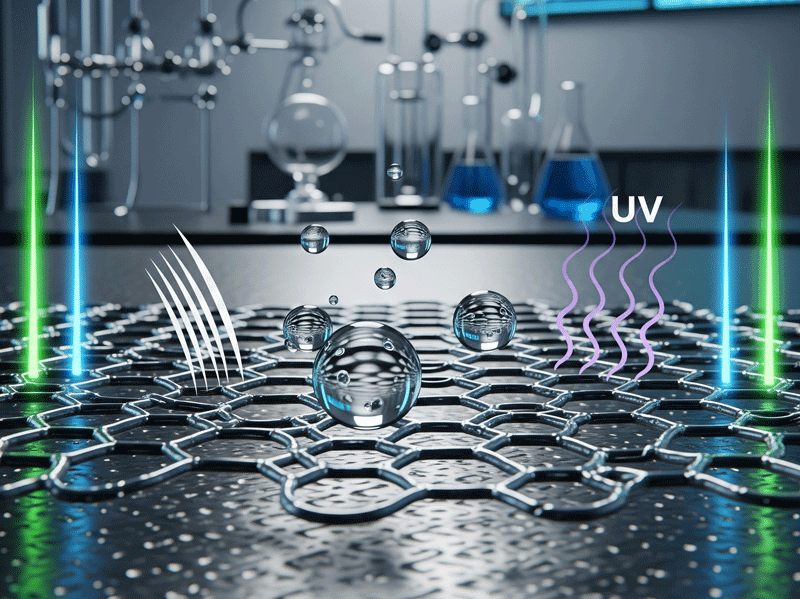
Main Benefits of Graphene Coating
| Benefit | Where it helps | What to verify |
|---|---|---|
| Barrier protection | Metals, packaging, marine parts, industrial equipment | Humidity, salt exposure, and long-term use tests |
| Scratch and wear resistance | Automotive paint, tools, consumer products | Abrasion data, not only glossy before-and-after photos |
| Hydrophobic behavior | Cars, glass, outdoor surfaces | Water behavior after washing and weathering |
| Thermal performance | Electronics and battery components | Measured heat transfer in the final product |
| Thin protection | Precision parts and electronics | Thickness control and adhesion to the substrate |
Automotive Uses
Graphene coating is often marketed for cars as a paint protection product. In this context, it usually competes with ceramic coatings, waxes, sealants, and paint protection film. A good automotive graphene coating may improve water beading, make washing easier, add gloss, and reduce light environmental wear.
It should not be sold as invincible armor. Road grit, automatic brush washes, bird droppings, strong chemicals, poor application, and neglected maintenance can still damage paint. Paint correction before application often matters more than the coating label because a coating locks in the surface condition underneath it.

Electronics and Technology Uses
In electronics, graphene-enhanced coatings may be studied for heat spreading, flexible conductive layers, sensors, corrosion control, and protective barriers. These uses are more technical than consumer paint protection because the coating may need to meet electrical, optical, mechanical, and thermal requirements at the same time.
The National Graphene Institute is one example of how graphene research is moving from material science toward real applications. That matters because coating claims should be judged by application, not by the material name alone. A coating for a circuit board, a ship part, and a car hood may all use graphene, but they are not solving the same problem.

Construction, Marine, and Industrial Uses
Industrial surfaces face salt, humidity, UV exposure, temperature cycling, vibration, chemicals, and abrasion. Graphene-enhanced anti-corrosion coatings are interesting because small flakes dispersed through a coating can slow the movement of oxygen and water toward metal.
The caution is that graphene must be part of a complete coating system. If a coating has pinholes, poor adhesion, or damaged edges, corrosion can still begin at weak points. A strong industrial system may need primer, resin, corrosion inhibitors, surface preparation, thickness control, and inspection, not only graphene.

Graphene Coating vs Ceramic Coating
Ceramic coatings are usually silicon dioxide or related inorganic protective systems used widely in automotive detailing. Graphene coatings are newer and often use graphene oxide or graphene nanoplatelets blended into a coating base. In many consumer products, the real difference may be formulation quality rather than the label.
A well-made ceramic coating can outperform a weak graphene coating. A well-made graphene-enhanced coating can outperform a cheap ceramic coating. Surface preparation, installer skill, curing, maintenance, and verified testing should carry more weight than the material buzzword.
How to Evaluate a Graphene Coating Product
- What type of graphene material is used?
- How much graphene is in the formula?
- Is the coating tested on the same substrate you will use?
- Does the seller provide abrasion, chemical resistance, UV, humidity, or salt exposure data?
- How long is the claimed durability, and under what maintenance conditions?
- Does the coating require professional preparation, curing, or controlled humidity?
- Can the coating be repaired or removed if it fails?
For consumer car products, be skeptical of phrases such as “permanent,” “bulletproof,” or “never wash again.” For industrial products, ask for standards-based testing and field references. A coating that works on polished lab samples may behave differently on welded, rough, contaminated, or flexing real-world surfaces.
Application and Maintenance Matter
A strong coating can fail early if the surface is prepared poorly. Dirt, old wax, oil, oxidation, salt, moisture, or polishing residue can prevent good bonding. For vehicles, the usual process is washing, decontamination, polishing if needed, careful wipe-down, controlled application, and proper curing time. For industrial use, surface preparation may include blasting, priming, thickness checks, and inspection.
Maintenance also affects durability. A graphene coating may make cleaning easier, but harsh cleaners, abrasive pads, poor wash technique, and ignored contamination can still shorten its life. The best question is not “How long does graphene last?” It is “How long does this exact coating last on this exact surface with this exact maintenance routine?”
Test the Coating Claim Before Trusting the Label
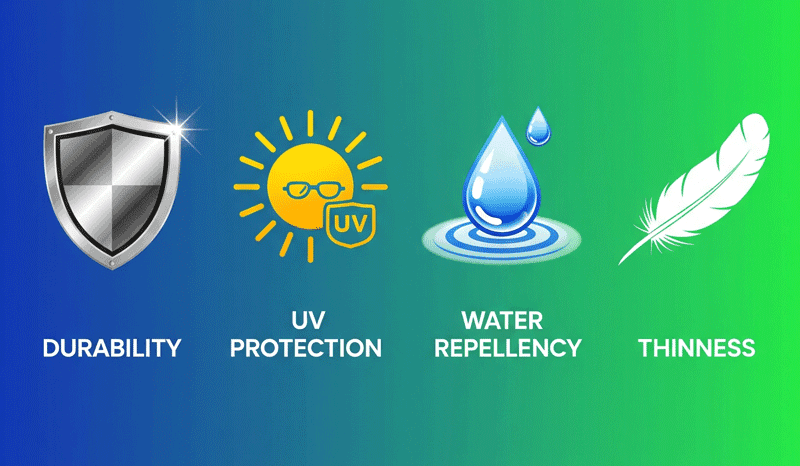
A product can use the word graphene without behaving like a miracle surface. The useful question is what the coating does better in the real use case: durability, slickness, chemical resistance, UV behavior, heat handling, or easier cleaning.
- Surface prep: a good coating can fail on a poorly cleaned or damaged surface.
- Durability claim: check whether the time estimate assumes ideal maintenance.
- Comparison claim: ask whether it is being compared with ceramic coating, wax, sealant, or no coating.
- Use-case fit: cars, electronics, marine surfaces, and industrial parts need different evidence.
This is educational materials and product context, not professional detailing, engineering, warranty, safety, or purchasing advice.
- If the claim mentions future computing, separate it from quantum computing hype.
Bottom Line
Graphene coating is a real and promising technology, especially for barrier protection, corrosion control, electronics, packaging, and high-performance surfaces. Its strengths come from graphene’s thinness, strength, impermeability, and ability to reinforce other coating systems.
The best way to understand graphene coating is to treat it as an engineered system, not a miracle layer. Look for test data, substrate-specific performance, realistic durability, and honest limits. When graphene is formulated well, it can improve coating performance. When it is added only for marketing, the word graphene does not guarantee protection.
Before Trusting a Graphene Coating Claim
A graphene coating should be judged by what it actually protects against: scratches, corrosion, heat, UV exposure, water, chemicals, or general wear. A vague promise of “nano protection” is weaker than a clear explanation of surface type, coating thickness, test conditions, and maintenance needs.
If you are new to the material itself, start with what graphene is and why it matters. For the larger materials context, read element engineering. Some graphene claims also appear around energy storage, where solid-state batteries are a useful reminder that a promising material still needs practical manufacturing proof.
Product note: this is general information, not a product endorsement. For industrial, vehicle, home, or electronics use, check manufacturer data sheets, surface compatibility, curing instructions, and safety guidance before applying any coating.
Graphene Coating Claims Need Context
A graphene coating should be judged by the job it is supposed to do: gloss, hydrophobic behavior, chemical resistance, easier cleaning, or longer protection. The material name alone does not prove performance. That is why the broader graphene explainer matters before comparing labels, price, and durability claims.
Coatings also sit inside the wider advanced-materials story. The useful question is not whether a product says graphene, ceramic, nano, or hybrid. It is whether the formulation, preparation, surface fit, and maintenance match the use case. The same practical skepticism applies to element engineering and other future materials.