






Decentralized finance, usually called DeFi, is a collection of blockchain-based financial services that attempt to provide lending, borrowing, trading, payments, yield, insurance, and asset management without a traditional bank or broker controlling the process.
DeFi is changing banking by showing that some financial functions can be performed through open networks and smart contracts. It is not replacing banking everywhere, and it is not risk-free. The most useful way to understand DeFi is to separate the real innovation from the speculative noise.
This guide explains how DeFi works, why it matters, what benefits it may offer, what risks users should understand, and what may happen as traditional finance and blockchain finance continue to overlap.
What Is Decentralized Finance?
Traditional finance usually depends on intermediaries. Banks hold deposits, payment networks move money, brokers execute trades, lenders assess borrowers, and custodians hold assets. DeFi tries to move some of those functions into software that runs on public blockchains.
The Federal Reserve describes DeFi as financial products and services that operate on decentralized platforms using blockchains and smart contracts, without a trusted central intermediary. That definition is useful because it focuses on the structure, not the hype.
Smart contracts are computer programs that execute rules on a blockchain. In a DeFi lending protocol, for example, a smart contract may hold collateral, issue a loan, calculate interest, and liquidate collateral if the borrower falls below required thresholds. For more context, see Ethereum smart contracts.
How DeFi Changes the Banking Model
DeFi does not copy every part of banking. It changes the operating layer. Instead of a bank ledger, DeFi uses a blockchain ledger. Instead of a bank employee approving a transaction, a smart contract follows code. Instead of office hours, the protocol may operate continuously. Instead of a private database, much of the activity can be visible on-chain.
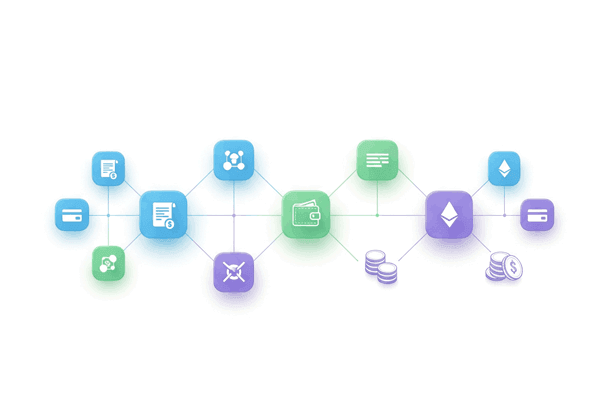
This structure can make financial services more programmable. A developer can build a wallet, exchange interface, lending dashboard, analytics tool, or portfolio product on top of open protocols. Users can move assets between protocols more quickly than they can move money through many traditional systems.
That openness is also a weakness. If a protocol has a code bug, governance problem, oracle issue, bridge exploit, or bad risk parameter, losses can happen quickly. There may be no customer service desk, chargeback, deposit insurance, or regulator that can reverse the transaction.
Benefits of DeFi
| Potential benefit | Why it matters | Limit |
|---|---|---|
| Open access | Anyone with a compatible wallet may interact with a protocol. | Internet access, fees, regulation, and technical skill still matter. |
| Programmability | Financial rules can be combined into automated workflows. | Bad code can automate bad outcomes. |
| Transparency | On-chain activity can be audited by users, researchers, and tools. | Smart contracts and off-chain entities may still be opaque. |
| Composability | Protocols can connect like building blocks. | Failures can spread through connected systems. |
| Continuous operation | Markets can function outside bank hours. | High volatility can trigger liquidations at any time. |
DeFi Lending and Borrowing
DeFi lending usually works differently from a bank loan. Instead of checking income, credit history, and identity, many protocols require crypto collateral. A borrower deposits assets into a smart contract and borrows another asset against that collateral. If collateral value falls too far, the protocol can liquidate it.
This model is efficient for crypto-native users, but it is not the same as broad consumer credit. Overcollateralized lending is useful for traders, market makers, and people who want liquidity without selling an asset. It is less useful for someone who needs an unsecured loan for a car, education, or small business.
DeFi lending can also be highly sensitive to price swings. If collateral drops quickly, liquidations can cascade. If an oracle reports a bad price, a protocol may make wrong decisions. If liquidity disappears, users may not exit at the expected price.
Decentralized Exchanges
Decentralized exchanges let users trade tokens through smart contracts rather than centralized order books. Automated market makers use liquidity pools, where users deposit token pairs and earn fees from trades.
This design expands access to token trading, but it introduces different risks: impermanent loss, thin liquidity, MEV, fake tokens, smart contract exploits, and slippage. A token being tradable on a decentralized exchange does not mean it is safe, valuable, audited, or legitimate.
Stablecoins and DeFi
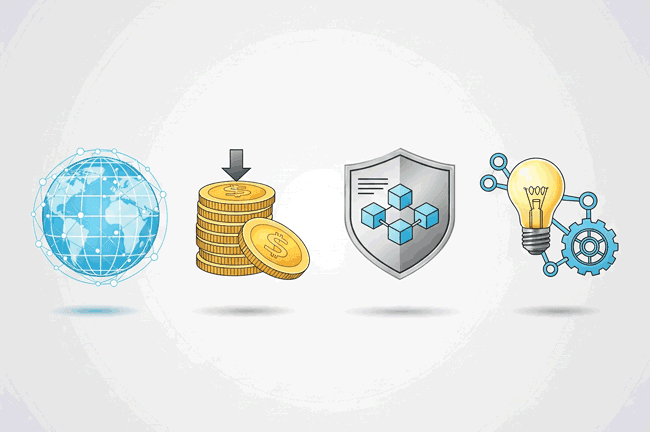
Stablecoins are central to DeFi because they give users a dollar-like asset for trading, lending, payments, and collateral. Some stablecoins are backed by reserves held by centralized issuers. Others use crypto collateral or algorithmic mechanisms.
A stablecoin is only as reliable as its design, reserves, redemption process, and market confidence. For a practical overview, see this stablecoin guide.
The Biggest DeFi Risks
- Smart contract risk: Bugs or design errors can drain funds.
- Oracle risk: Wrong external price data can trigger bad trades or liquidations.
- Bridge risk: Cross-chain bridges have historically been high-value targets.
- Governance risk: A small group may control upgrades, fees, or emergency powers.
- Custody risk: Losing a seed phrase or signing a malicious transaction can be irreversible.
- Regulatory risk: Rules around tokens, stablecoins, taxation, and intermediaries continue to evolve.
For custody basics, read hardware wallet and crypto custody safety. This is the part many new users underestimate. A good yield strategy is useless if the wallet is compromised, approvals are unlimited, or the user signs a malicious transaction.
How Traditional Banks May Respond
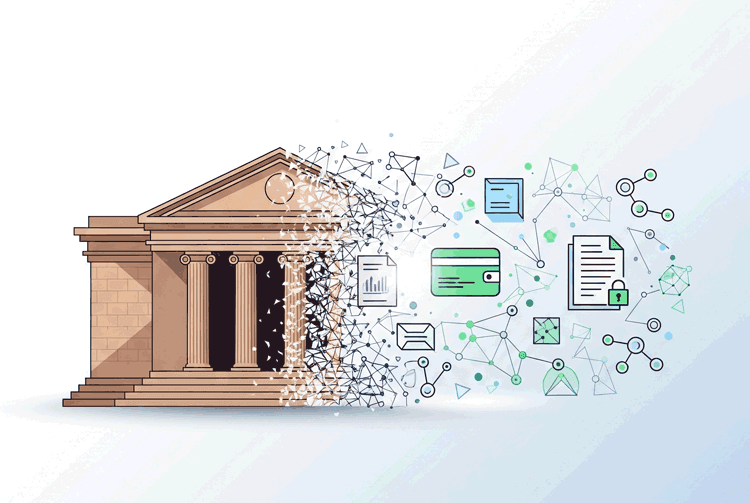
Banks are unlikely to ignore DeFi forever. Some ideas from DeFi may influence traditional finance even if consumers never use a self-custody wallet. Tokenized deposits, faster settlement, programmable payments, automated compliance, on-chain collateral, and transparent audit trails may all shape future banking infrastructure.
At the same time, regulated institutions must handle consumer protection, identity verification, sanctions compliance, capital requirements, operational resilience, and legal finality. That means bank adoption will likely be selective. The future may be a hybrid system: regulated institutions using blockchain rails in some areas while fully open DeFi remains a separate, higher-risk environment.
How to Use DeFi More Safely
DeFi users should treat every action as a financial and security decision. Start with small amounts, use a separate wallet for experiments, verify URLs, read audits without assuming audits are guarantees, and understand liquidation rules before borrowing.
Do not chase yield without asking where the yield comes from. Trading fees, lending demand, token incentives, leverage, and risky counterparties produce very different risk profiles. If a yield looks high and effortless, the risk is usually hidden in token emissions, collateral volatility, smart contract exposure, or insolvency risk.
DeFi is best approached like a powerful tool, not like a savings account. It can give users more control, but it also makes users responsible for mistakes that a bank might normally catch or reverse.
Where DeFi Fits Among Stablecoins, Smart Contracts, and Custody
DeFi is not one separate app or one token. It is a stack of tools that usually depends on stablecoins, smart contracts, wallets, bridges, or layer-two networks. That is why a DeFi decision should be judged by the whole path a user takes, not only by the yield or headline feature.
The money layer is easier to understand through stablecoins explained. The automation layer connects to Ethereum smart contracts, while transaction cost and speed often connect to Ethereum Layer Two. Before using any protocol, the custody side also matters, so compare it with hardware wallet and crypto custody safety.
Reader note: this is an educational technology explainer, not financial or investment advice. DeFi tools can fail through smart-contract bugs, bad custody, bridge risk, oracle problems, liquidation, scams, or regulation changes.
Use DeFi Only When You Understand the Failure Path
The safest DeFi question is not only what the yield, swap, or loan promises. It is what fails if the app, bridge, oracle, stablecoin, wallet, or chain behaves badly. DeFi removes some intermediaries, but it also moves more responsibility to the user.
- Contract risk: a clean interface can still interact with flawed or malicious code.
- Liquidity risk: exiting a position may be expensive or impossible when markets are stressed.
- Oracle risk: bad price data can trigger liquidations or unfair trades.
- Wallet risk: approvals, seed phrases, and signing habits can matter more than the protocol itself.
This is educational crypto context, not financial, legal, tax, or investment advice. If the failure path is unclear, the position is probably too complex or too large.
Bottom Line
DeFi is changing banking by proving that financial services can be built with open blockchain networks, smart contracts, and programmable assets. It can improve access, speed, composability, and transparency for certain use cases.
It is also risky. Code can fail, markets can move violently, stablecoins can lose confidence, governance can be centralized, and users can lose funds through mistakes or scams. The strongest DeFi future will likely combine useful automation with better security, clearer regulation, stronger custody practices, and more honest risk disclosure.
DeFi and CBDCs Solve Different Problems
DeFi tries to build open financial tools around public networks and smart contracts. CBDCs would be issued by central banks and shaped by public policy. For the other side of the digital money debate, read what CBDCs are.
How DeFi Connects to the Wider Digital Money Map
DeFi changes the financial workflow, while CBDCs and stablecoins change the form or issuer of money used inside that workflow. That distinction helps avoid a common confusion: a digital currency is not automatically decentralized finance, and a DeFi app is not automatically safer because it runs on-chain.
Many DeFi actions also rely on Ethereum smart contracts, bridges, wallets, and liquidity assumptions. Before using any protocol, the important questions are custody, contract risk, fees, liquidation rules, and whether the user understands what can fail.