





Element engineering is the idea of designing, transforming, and using chemical elements in more deliberate ways. It covers advanced materials, isotopes, nuclear processes, nanotechnology, catalysts, semiconductors, batteries, medicine, and the search for cleaner industrial chemistry.
The phrase can sound like science fiction because it touches old dreams such as turning one element into another. In reality, the future of element engineering is less about magic and more about control: controlling atoms, surfaces, isotopes, defects, crystal structures, and reactions with greater precision.
This guide explains what element engineering means, where it is already happening, what may come next, and why the most realistic breakthroughs will come from careful design rather than headline-friendly alchemy.
What Is Element Engineering?
Element engineering is not one single field. It is a way of thinking across chemistry, physics, materials science, and engineering. Instead of accepting materials as fixed, scientists ask how changing composition, structure, impurities, isotopes, or atomic arrangement can create better properties.
A tiny amount of one element can change how a semiconductor conducts electricity. A different isotope can matter in medicine or nuclear technology. A catalyst can make a chemical reaction cleaner. A new alloy can resist heat, corrosion, or stress better than older materials. These are all practical forms of engineering matter at the elemental level.
Why Elements Matter So Much
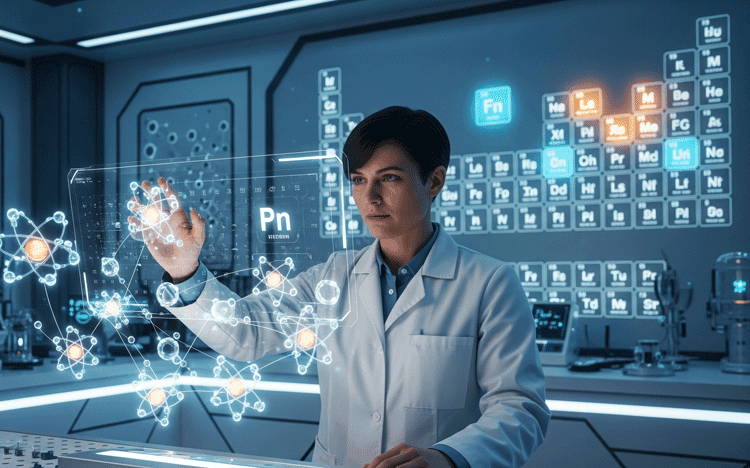
Elements are the basic building blocks of materials. Carbon can appear as graphite, diamond, graphene, or carbon fiber depending on structure. Silicon becomes the backbone of electronics when purified and patterned. Lithium, nickel, cobalt, iron, phosphorus, sodium, and manganese shape battery performance. Rare earth elements help magnets, wind turbines, speakers, and electric motors.
Small changes can create large effects. Adding chromium to steel improves corrosion resistance. Doping silicon with tiny amounts of other elements changes its electrical behavior. Changing a catalyst surface can lower the energy needed for a reaction. This is why element engineering has such broad reach.
Is Turning Mercury Into Gold Possible?
The old alchemy dream was to turn base metals into gold. Modern nuclear physics shows that elements can be transformed by changing the number of protons in the nucleus. In that narrow sense, transmutation is possible. The problem is practicality. It usually requires nuclear reactions, particle accelerators, reactors, or decay pathways that are expensive, inefficient, and not useful for making commercial gold.
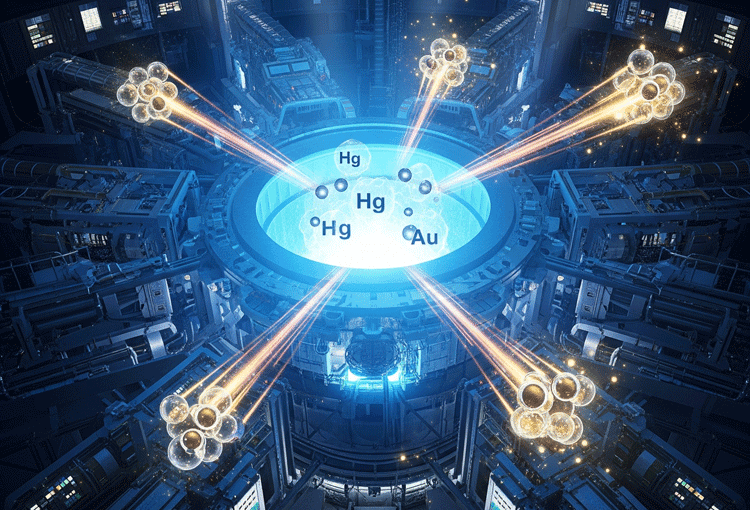
The more important future is not making precious metals. It is designing materials with better performance: safer batteries, cleaner catalysts, stronger magnets, heat-resistant alloys, medical isotopes, and semiconductors that use energy more efficiently.
Advanced Materials Are the Real Frontier
Many future technologies depend on better materials. Electric vehicles need batteries that are cheaper, safer, longer-lasting, and easier to recycle. Solar panels need efficient materials that can be manufactured at scale. Fusion and advanced nuclear systems need materials that tolerate radiation, heat, and stress. Electronics need chips with smaller features, better heat management, and new architectures.
Element engineering contributes by adjusting composition and structure. A battery cathode can be redesigned with different ratios of nickel, manganese, cobalt, iron, or phosphate. An alloy can be tuned for aircraft engines. A catalyst can be designed to reduce waste in chemical manufacturing. A coating can protect metals from corrosion.
This connects with topics such as graphene coating and solid state batteries, where small material decisions can decide whether a technology works outside the lab.
Isotope Engineering
Isotopes are versions of an element with the same number of protons but different numbers of neutrons. That difference can change nuclear behavior, medical usefulness, tracing ability, and sometimes material properties.
Medical imaging and cancer treatment use radioisotopes. Industry uses isotopes for tracing and measurement. Energy systems may need isotope separation or management. Fusion research often discusses deuterium and tritium, which are hydrogen isotopes. Isotope engineering is powerful because it works at the nuclear identity level rather than only the chemical level.
Element Engineering in Semiconductors
Modern chips are already element-engineered products. Pure silicon is not enough. Manufacturers use dopants, insulating layers, metal gates, copper or other interconnects, high-k dielectrics, and increasingly complex packaging materials. Every layer must behave predictably at tiny scales.
As classic transistor scaling gets harder, materials become even more important. Better heat spreaders, advanced packaging, compound semiconductors, 2D materials, and chiplets all depend on controlling materials at the atomic and nanoscale level.
Clean Chemistry and Catalysts
One of the most practical futures for element engineering is cleaner chemistry. A catalyst helps a reaction happen more efficiently without being consumed in the same way as a normal reactant. Better catalysts can reduce energy use, lower waste, improve yields, and make industrial processes less polluting.
This matters for fertilizers, fuels, plastics, hydrogen, carbon capture, and many everyday materials. A small change in catalyst composition can have large economic and environmental effects when scaled across a major industry.
Supply Chains and Critical Minerals
Element engineering also has a supply-chain side. Some technologies depend on elements that are geographically concentrated, difficult to mine, expensive to refine, or environmentally damaging to extract. A better material is not only the one with the best lab performance. It must also be available, affordable, recyclable, and acceptable to produce.
Future designs may reduce dependence on scarce elements, replace them with common ones, or make recycling easier. For example, battery chemistry research often tries to reduce cobalt use. Magnet research explores how to use rare earth elements more efficiently. Semiconductor manufacturing looks for materials that can be processed reliably at scale.
What Could Come Next?
- Better battery materials with longer life and less fire risk.
- Low-cobalt or cobalt-free battery chemistries.
- More efficient catalysts for hydrogen and industrial chemistry.
- Advanced alloys for heat, corrosion, and radiation resistance.
- Medical isotope production with more reliable supply chains.
- New semiconductor materials for AI and power electronics.
- Coatings that protect infrastructure and reduce maintenance.
- Recycling processes that recover critical elements more cleanly.
Limits and Risks
Element engineering can create powerful technologies, but it also raises safety, environmental, and economic questions. New materials may be hard to recycle. Nanomaterials may need careful exposure control. Mining critical minerals can damage ecosystems. Nuclear-related processes require strict regulation. A material that performs well may still fail if the supply chain is fragile.
That is why the future needs more than discovery. It needs lifecycle thinking: where the element comes from, how it is processed, how workers are protected, how products are repaired, and how materials are recovered at end of life.
Element Engineering and Recycling
Recycling will become more important as advanced technologies use more specialized materials. A phone, battery, solar panel, wind turbine, or chip may contain small amounts of valuable elements spread across complex structures. Recovering those elements is often harder than recycling a simple material like clean aluminum.
Future material design should consider recovery from the beginning. Can the product be disassembled? Can critical elements be separated without extreme energy use? Can a battery chemistry be recycled safely? Can a coating protect a product without making end-of-life processing harder? These questions turn element engineering into circular design.
Materials Discovery Is Becoming More Digital
Another change is how new materials are discovered. Researchers can use simulation, databases, automation, and machine learning to screen possible compounds before making them in the lab. This does not remove experiments, but it can narrow the search.
Instead of testing materials one by one at random, teams can predict which combinations may have useful properties, then focus laboratory work on the best candidates. That can speed up discovery for batteries, catalysts, semiconductors, membranes, and alloys. The hard part is still proving that a material works under real conditions and can be manufactured reliably.
Why This Field Feels Futuristic
Element engineering feels futuristic because it changes the level of control. Older material use often started with what nature provided or what traditional industry already knew how to make. Newer approaches ask whether atomic structure, isotope choice, defects, surfaces, and nanoscale patterns can be tuned for a specific job.
That kind of control could affect energy, medicine, electronics, construction, transportation, and climate technology. But the best breakthroughs will still need boring proof: durability, safety, cost, supply, repairability, and regulation.
How to Read Element Engineering Headlines
When you see a headline about a miracle material, ask what scale was tested. Was it a tiny lab sample, a prototype, or a manufacturable product? Was performance measured once or after long-term stress? Does the material require rare inputs, extreme processing, or conditions that make mass production unrealistic?
This habit keeps the topic exciting without becoming gullible. Element engineering is genuinely powerful, but the distance between discovery and everyday product can be long.
How to Read Element Engineering Claims
Element engineering headlines can sound magical because the scale is small and the language is futuristic. A better reading starts with the mechanism. Is the claim changing an isotope, arranging atoms in a material, improving a catalyst, reducing impurity, or redesigning a supply chain? Those are very different achievements.
- Ask what changed: composition, structure, purity, isotope mix, coating, or manufacturing method.
- Ask what improved: strength, conductivity, heat tolerance, lifespan, safety, cost, or recyclability.
- Ask what blocks scale: rare inputs, energy use, equipment cost, regulation, or waste handling.
- Be careful with miracle wording: if the article jumps from lab result to world-changing product, the missing step is probably manufacturing.
Source note: this is educational science and materials context, not lab, investment, or safety advice. For a real-world example of isotope production and supply, the U.S. Department of Energy’s Isotope Program is a useful reference.
Bottom Line
The future of element engineering is not about turning mercury into gold for profit. It is about designing matter more intelligently. Batteries, chips, catalysts, coatings, medical isotopes, magnets, and clean energy systems all depend on better control of elements and materials.
The most important breakthroughs will likely look practical rather than magical: safer storage, cleaner reactions, stronger materials, less waste, better recycling, and technologies that can scale beyond the lab.
Where Materials Meet Energy and Graphene
Element engineering connects to several practical technology stories. For energy systems, see nuclear fusion explained simply. For advanced materials, compare it with what graphene is and the practical limits of graphene coating.
Graphene as One Example of Element Engineering
Element engineering is broader than any one material, but graphene is a useful example because tiny structural differences can change performance dramatically. Layer count, defects, bonding, substrate, and manufacturing method can turn the same headline material into very different real-world outcomes.
That same idea appears in advanced chip technology, where packaging, materials, thermal behavior, and power efficiency matter as much as raw transistor counts. It also overlaps with future computing research, including quantum computing, where materials and stability can limit what is practical.