





Lithium-ion battery explosion risks rise when a battery is damaged, overheated, charged with the wrong equipment, repaired carelessly, or used after warning signs appear. In normal devices, lithium-ion batteries are usually safe. The problem is that a failing battery can move from “seems fine” to “smoke and fire” quickly.
This guide focuses on practical decisions: when to stop using a device, when not to repair it yourself, how to charge more safely, what warning signs matter, and how to handle batteries in phones, laptops, power banks, e-bikes, scooters, tools, and loose cells.
If you want the broader science of thermal runaway and common fire causes, read the companion guide to lithium battery explosions and thermal runaway. This page is the hands-on safety checklist.
When to Stop Using a Lithium-Ion Battery Immediately
Do not wait for a battery to “get worse” if it already shows failure signs. Stop using and charging the device if you notice:
- swelling, bulging, or a lifted phone screen
- a battery pack that no longer sits flat
- unusual heat during light use or charging
- smoke, hissing, popping, or a chemical smell
- leaking fluid, corrosion, or visible damage
- sudden shutdowns after a drop or impact
- a charger, cable, or battery connector that becomes hot or discolored
For swollen phone batteries, use the dedicated steps in our phone battery swelling safety guide. Do not press a swollen device flat, continue charging it overnight, or keep it in a pocket.
Symptom-to-Action Safety Table
| What you see | Likely risk | Safer action |
|---|---|---|
| Phone screen lifting or back panel bulging | Swollen battery and internal pressure | Stop using and charging; arrange professional battery replacement or recycling |
| Device gets too hot to hold while charging | Charging fault, battery damage, or blocked heat dissipation | Unplug only if safe, move away, and do not resume charging until inspected |
| Power bank smells chemical or makes hissing sounds | Possible venting or internal failure | Move away, keep others away, and call emergency services if smoke/fire appears |
| E-bike battery was in a crash or flood | Hidden cell, wiring, or battery management damage | Do not charge; contact the manufacturer, dealer, or qualified service center |
| Loose 18650 cells are carried in a pocket or bag | Metal objects can short exposed terminals | Use protective cases and avoid loose cells unless the device manufacturer specifies them |
Why Repair Work Increases Battery Risk
Battery repair is risky because lithium-ion cells are thin, layered, and often glued into devices. A prying tool, metal blade, heat gun, or aggressive bending can damage the separator inside the cell. If the internal positive and negative layers touch, the battery can short and heat rapidly.
This is why DIY battery replacement should be approached carefully. A cracked screen repair is different from removing a glued battery. If you do not have the right tools, replacement parts, fire-resistant work surface, and disposal plan, professional service is the safer choice.
Before repair, power off the device. If possible, reduce the charge level first because a fully charged battery contains more stored energy. Reducing charge does not make puncturing safe, but it can reduce severity if a mistake occurs.
Charging Safety: What Actually Helps
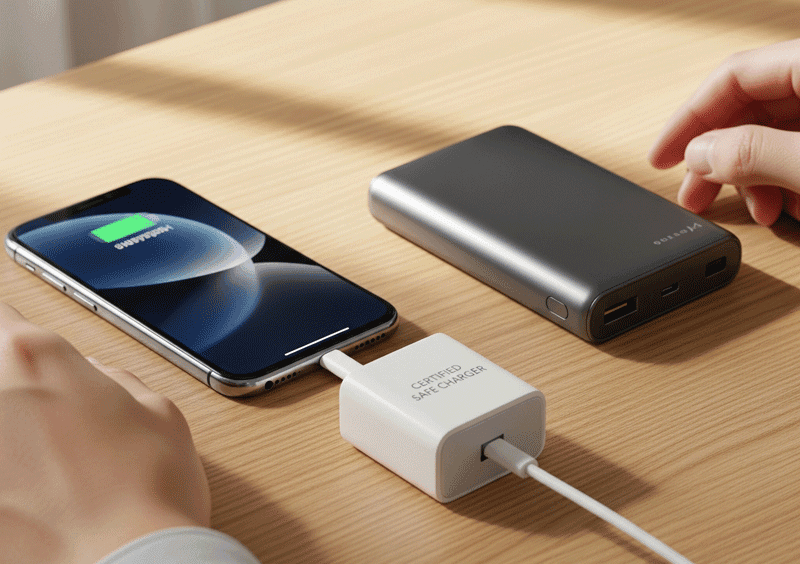
The U.S. Fire Administration advises using the charger that came with the device or one from a reputable supplier, following manufacturer instructions, and unplugging lithium-ion devices if they become noticeably hot while charging.
Use these habits:
- charge on a hard, open surface, not on bedding or under pillows
- avoid charging damaged, swollen, wet, or crashed devices
- replace frayed, crushed, bent, or overheating cables
- avoid cheap no-name chargers for high-power devices
- do not cover laptops, power stations, or chargers while charging
- keep e-bike and scooter batteries away from exits while charging
- check manufacturer recalls if a battery behaves abnormally
For ordinary travel battery drain, the issue is usually settings rather than battery failure. See phone battery drain on airplane trips if your phone is losing charge but not overheating, swelling, or smoking.
Loose 18650 Cells and Vape/E-Bike Battery Packs
Some devices use removable cylindrical lithium-ion cells, often called 18650 cells. The CPSC has warned that loose lithium-ion battery cells separated from battery packs can be hazardous when handled, transported, stored, charged, or used improperly. Exposed terminals can short against keys, coins, or other metal objects.
Do not carry loose cells in a pocket or bag. Use a proper plastic case. Do not buy random rewrapped cells from unknown sellers. Do not use a charger that is not designed for the exact cell type. If a device was designed to use an integrated battery pack, do not improvise with loose cells.
For e-bikes and scooters, be even more cautious. Larger battery packs store more energy, and uncertified or incompatible replacement packs can create serious fire risk. Use batteries and chargers approved by the manufacturer, and pay attention to CPSC warnings or recalls for specific products.
Battery Management Systems Help, But They Are Not Magic
Modern devices often include protection circuits or battery management systems. These can monitor voltage, current, temperature, charging behavior, and cell balance. They can reduce risk by stopping unsafe charging or shutting down a pack under abnormal conditions.
But protection systems can be damaged, bypassed, poorly designed, or overwhelmed. A battery management system cannot make a crushed cell safe. It cannot undo water damage. It cannot guarantee safety when the wrong charger or counterfeit battery is used.
What to Do During an Active Battery Incident
If a battery is smoking, hissing, venting gas, or burning, prioritize people, not the device. Move away, warn others, and call emergency services if there is fire, heavy smoke, or any threat to people or property. Do not pick up a failing battery with bare hands.
If you are on an airplane, notify the flight crew immediately. The FAA advises passengers to alert crew members if a device or battery is overheating, expanding, smoking, or burning. Spare lithium batteries and power banks should be kept in carry-on baggage under FAA PackSafe rules.
After the incident, do not reuse the battery or device. A battery that cooled down after smoking or swelling is not automatically safe.
Safe Storage and Disposal
Store lithium-ion batteries in a cool, dry place away from direct sun and heat. Protect terminals on spare batteries. Do not store damaged or swollen batteries in a bedroom, car, or cluttered area near flammable materials.
Do not put lithium-ion batteries in household trash. Damaged, swollen, recalled, or overheated batteries may need special handling through local household hazardous waste or e-waste programs. Contact your local waste authority before transporting a damaged battery.
How to Lower Risk Without Overthinking It
You do not need to fear every phone or laptop battery. Focus on the habits with the biggest payoff:
- use reputable chargers and batteries
- avoid charging on soft, heat-trapping surfaces
- do not ignore swelling, smoke, odor, or unusual heat
- avoid DIY battery removal if the battery is glued, swollen, or hard to access
- keep loose cells in protective cases
- check recalls for e-bikes, scooters, power banks, and replacement batteries
- recycle batteries through proper channels
Decide Whether Repair Is Worth the Battery Risk
Repair can be sensible for many devices, but lithium-ion batteries change the risk calculation. A cheap repair is not cheap if the pack is swollen, punctured, overheated, counterfeit, physically crushed, or handled without the right tools and disposal path.
- Lower risk: external inspection, charger replacement, or manufacturer-supported service.
- Higher risk: prying near glued cells, bending packs, reusing damaged cells, or mixing unknown batteries.
- Stop point: heat, smell, smoke, swelling, or sparks means the repair plan should end.
- Handoff: damaged cells need a repair provider or recycler that accepts lithium batteries.
This is general battery safety information, not repair, firefighting, shipping, legal, or emergency advice.
Bottom Line
Lithium-ion battery explosion risks are manageable when you treat batteries as high-energy components rather than disposable accessories. Most incidents start with damage, heat, bad charging, poor repair handling, uncertified parts, or ignored warning signs.
If a battery looks normal and the device works normally, basic safe charging habits are usually enough. If a battery swells, smokes, hisses, smells chemical, leaks, overheats, or was damaged in a crash, stop using it and handle it as a safety issue.
Sources: U.S. Fire Administration lithium-ion battery safety guidance; CPSC warning on loose lithium-ion cells; CPSC micromobility battery safety warnings; FAA PackSafe lithium battery guidance.
Repair Decisions Matter as Much as Charging Habits
Battery safety is not only about how the device is charged. Repair quality, replacement parts, physical damage, heat exposure, and storage habits all affect risk. A cheap replacement battery or a rushed repair can create problems that look like normal charging trouble at first.
When the device is already swollen, use the more specific guide on phone battery swelling. If you want to understand how heat and pressure can escalate, read lithium battery explosions. For less severe drain symptoms, compare the issue with phone battery drain on airplane mode.
Safety note: battery repair can be hazardous. This guide is for risk awareness, not step-by-step repair advice. Use qualified repair service when a lithium-ion battery is damaged, swollen, leaking, or unusually hot.
Repair, Swelling, and Charging Context
Repair and charging decisions should change once swelling appears. A phone battery swelling case and a power bank swelling case may look similar, but the safe next step depends on the device, heat, odor, deformation, and whether the battery can be isolated without force. For the failure chain behind those symptoms, see the guide to lithium battery explosions.









test