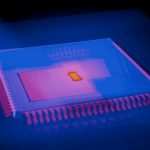





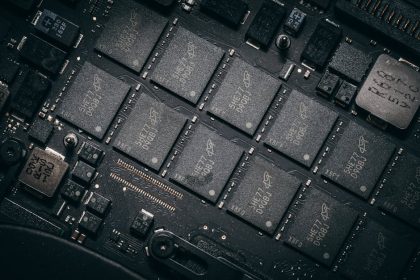
Advanced chip technology is moving beyond the simple idea that every future improvement comes from shrinking silicon transistors. Silicon is still central to computing, but the next era of chips depends on new architectures, advanced packaging, chiplets, memory improvements, power efficiency, and sometimes new materials.
The phrase “beyond silicon” does not mean silicon disappears. It means the future of computing will use silicon more intelligently and combine it with other techniques when old scaling methods become harder.
This guide explains what future chip technology may look like, why advanced packaging matters, and how materials, AI accelerators, and edge computing are changing the chip roadmap.
Why Silicon Scaling Is Harder Now
For decades, chip progress was strongly associated with shrinking transistor features. Smaller transistors could improve density, performance, and energy efficiency. That trend made computers faster and cheaper over time.
Today, shrinking is still happening, but it is more expensive and technically difficult. Heat, leakage, manufacturing complexity, lithography limits, and design cost all create pressure. The industry now needs multiple paths forward instead of one simple scaling story.
Chiplets Change the Design
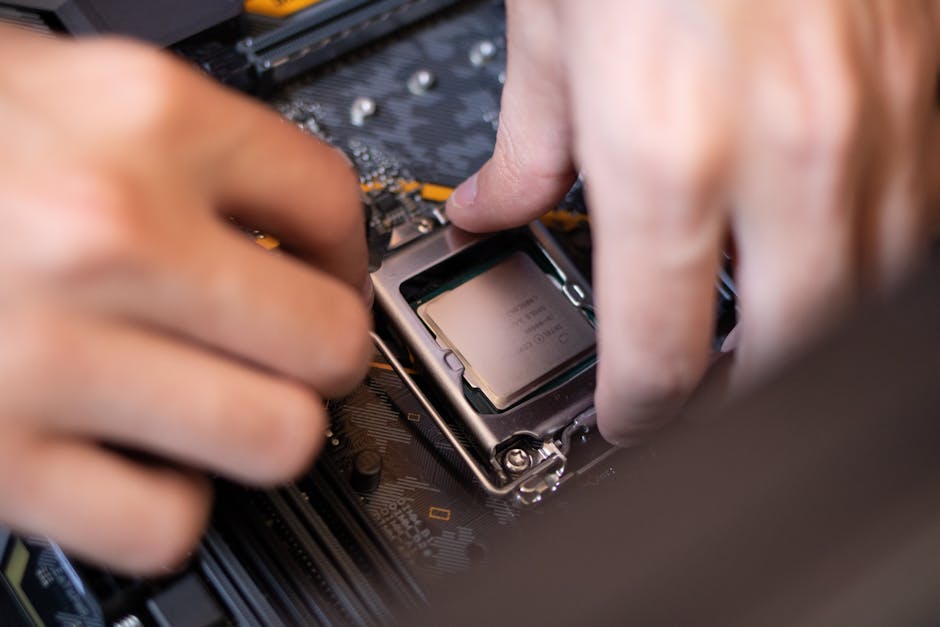
A chiplet is a smaller chip component designed to work with other chiplets inside one package. Instead of building one huge chip, designers can combine compute, graphics, memory, input/output, AI acceleration, and other functions in a modular way.
This can improve manufacturing yield, allow different components to use different process nodes, and make designs more flexible. The challenge is connecting chiplets fast enough that they behave like one coherent system.
Advanced Packaging Becomes Part of Performance
Packaging used to sound like the final step after the chip was made. Now it is part of the performance story. Advanced packaging can place chiplets and memory closer together, reduce communication delays, improve bandwidth, and support stacked designs.
For AI and high-performance computing, this matters because data movement is often the bottleneck. A processor may be powerful, but if memory and compute are too far apart, energy and time are wasted moving data.
Memory Is the Hidden Limiter
Future chips need more than fast compute. They need fast access to data. AI models, graphics, simulations, databases, and edge systems all depend on memory bandwidth and capacity.
High-bandwidth memory, larger caches, smarter memory hierarchies, and near-memory computing are all attempts to reduce the gap between compute and data. In many future systems, memory design may matter as much as transistor count.
Specialized Accelerators
General-purpose CPUs are still essential, but specialized accelerators are growing because many workloads repeat the same math patterns. GPUs accelerate graphics and parallel computing. NPUs accelerate neural networks. Video engines accelerate encoding and decoding. Security engines handle encryption and trusted operations.
The future chip is increasingly a team of specialized blocks. The key is deciding which block handles which job. For the AI side, see future AI processors.
New Materials and Beyond-Silicon Ideas
Beyond silicon can also mean exploring materials such as gallium nitride, silicon carbide, graphene, carbon nanotubes, 2D semiconductors, photonic components, or new memory materials. These may help with power electronics, sensors, communication, heat, or specialized computing.
Not every material becomes a mainstream processor. The path from lab promise to manufacturing scale is long. A new material must be reliable, affordable, compatible with existing processes, and useful enough to justify the transition.
Power Electronics Matter Too
Some beyond-silicon progress is not about CPUs or AI chips. Silicon carbide and gallium nitride are important in power electronics because they can handle high voltage, high temperature, and efficient switching. This affects electric vehicles, chargers, solar inverters, power supplies, and industrial systems.
These chips may not be as famous as AI accelerators, but they shape the energy efficiency of real-world infrastructure.
Photonic and Optical Ideas
As data movement becomes a bottleneck, optical communication becomes more interesting. Light can move data efficiently over longer distances than electrical signals in some contexts. Data centers already use optical networking, and future chip systems may bring optical links closer to processors.
Photonic computing itself is still specialized, but optical interconnects may become increasingly important as AI clusters and high-performance systems grow.
What Advanced Chips Enable
| Technology | Why it matters | Likely impact |
|---|---|---|
| Chiplets | Modular design | More flexible high-performance systems |
| Advanced packaging | Shorter data paths | Better bandwidth and efficiency |
| AI accelerators | Specialized machine learning hardware | More local and cloud AI capability |
| Power materials | Efficient switching | Better EVs, chargers, and energy systems |
| New memory | Faster access to data | Less bottleneck for AI and analytics |
Why Software Still Matters
Advanced chip technology only becomes useful when software can use it. Operating systems, compilers, drivers, AI frameworks, and developer tools decide whether specialized hardware improves real workloads or sits unused.
This is why chip progress is a full-stack problem. Hardware, software, cooling, memory, packaging, and manufacturing all need to work together.
Thermal Design Becomes a Limit
Advanced chips create heat, and heat limits sustained performance. Phones, laptops, game consoles, servers, and vehicles all have different cooling constraints. A chip that performs well for a short benchmark may slow down if the device cannot remove heat.
Future chip technology therefore includes thermal materials, cooling systems, power management, workload scheduling, and efficient architectures. Performance is not only what the chip can do for one second. It is what the whole system can sustain.
Security Moves Into Hardware
As devices handle more personal data and AI workloads, hardware security becomes more important. Secure boot, trusted execution environments, encryption engines, and protected memory can help defend keys, identity, and sensitive processing.
Hardware security is not a replacement for good software, but it gives software stronger foundations. A future beyond silicon still needs trust built into the device.
Repairability and Longevity
Chip progress can unintentionally make products harder to repair if components become more integrated. Better integration improves speed and efficiency, but it may also make memory, storage, or accelerators harder to replace.
A stronger future should balance performance with product lifespan. Faster chips are useful, but durable devices and long software support also matter for sustainability.
How Consumers May Notice the Change
Most people will not think about chiplets or packaging. They will notice longer battery life, faster AI features, cooler laptops, better cameras, smoother games, stronger security, and devices that keep useful performance for longer.
The best chip technology disappears into the experience. It makes the device feel faster, quieter, more capable, and less dependent on the cloud.
Beyond Silicon Does Not Mean One Path
The future will likely be a portfolio of approaches. Silicon will keep improving where it still makes sense. Chiplets will help with modular systems. Power materials will improve energy conversion. Photonics may improve data movement. Specialized accelerators will handle AI and media tasks.
This mix matters because no single technology solves every bottleneck. A phone, EV charger, AI server, medical sensor, and gaming GPU all need different trade-offs.
Manufacturing Reality
A new chip idea is only useful if it can be manufactured reliably. Yield, testing, packaging, supply agreements, equipment, and cost decide whether a technology can leave the lab. This is why some promising materials stay niche for a long time.
Advanced chip technology is therefore both science and manufacturing discipline. The future belongs to ideas that can scale, not only ideas that look impressive in a paper.
Connection to Edge and AI
As more AI runs on devices and at the edge, chips need to be efficient in small power budgets. Beyond-silicon ideas may help, but architecture and software are just as important. The best edge chip is not the most powerful one; it is the one that gives the needed result within heat, battery, and cost limits.
Advanced Chip Technology Is More Than a Smaller Process Node
Beyond-silicon progress is often discussed as if one material will suddenly replace today’s chips. In practice, the more realistic path is mixed: chiplets, advanced packaging, new memory layouts, better interconnects, selective new materials, photonics research, and tighter hardware-software design.
For the broad semiconductor roadmap, start with next-gen chips. For AI-specific processor demand, read future AI processors. For graphics-focused architecture, compare it with new GPU architecture.
The strongest reader test is practical: does a claimed breakthrough improve power use, memory movement, heat, yield, cost, security, or software support? If it only sounds futuristic, it may not matter to real devices for years.
How to Read Advanced Chip Claims
Advanced chip technology is easy to overhype because every announcement uses similar language: smaller node, faster AI, better efficiency, or a new material. A better reader filter is to ask what bottleneck the design is actually trying to reduce.
- If the bottleneck is communication between parts of the chip, packaging and chiplets may matter more than transistor size.
- If the bottleneck is memory movement, a faster compute block can still feel limited because data cannot reach it quickly enough.
- If the bottleneck is heat, the practical win may be efficiency and battery life, not a dramatic speed jump.
This is also why beyond-silicon ideas should be treated as a portfolio, not a single replacement story. Some advances will show up first in servers, some in phones, some in cars, and some only in manufacturing tools that ordinary buyers never see.
Source note: this is educational technology context, not engineering, investing, or purchasing advice. For a deeper technical-policy baseline on why AI chips matter, Georgetown CSET’s AI chips report is a useful reference.
Bottom Line
Advanced chip technology is moving beyond a simple silicon-shrink story. Silicon remains important, but future progress will depend on chiplets, advanced packaging, memory systems, AI accelerators, power electronics, new materials, and better software support.
The future beyond silicon is not one replacement material. It is a more diverse chip ecosystem built around the right technology for the right workload.
Why Future Chips Matter for Edge AI
Advanced chips are not only a data-center story. More efficient processors can move useful work closer to the user, which strengthens the case for edge computing. In everyday devices, that can mean faster voice features, smarter cameras, better battery behavior, and fewer cloud round trips when the task is small enough to run locally.
The trade-off is that chip progress does not remove product decisions. A device can have an NPU and still depend on the cloud for larger models, updates, account features, or analytics. The neural processor guide focuses on that local AI layer, while data governance at the edge explains the policy side.
Beyond Silicon Also Means Better Materials
Future chip progress is not only about making everything smaller. Materials, packaging, heat flow, interconnects, and power efficiency can decide whether a design is usable. That is why element engineering belongs beside chiplets, AI accelerators, and memory advances.
Graphene is one example of a material that attracts chip-related attention because of conductivity, thinness, and thermal possibilities. But the gap between a promising material and a mass-produced chip is large, which is why practical claims should be checked against manufacturing, yield, cost, and integration limits.