





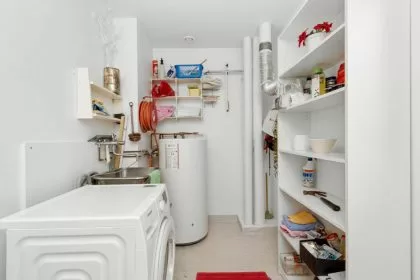
Heat pump water heater pros and cons are worth understanding before your old tank fails. A heat pump water heater can be one of the most efficient upgrades in a home, but it is not the right fit for every garage, basement, utility closet, climate, or budget.
The basic appeal is simple: instead of making heat directly like a standard electric resistance water heater, a heat pump water heater moves heat from the surrounding air into the water tank. That can use much less electricity. The tradeoff is that the unit needs enough air, space, drainage, and installation planning to work well.
This guide is not a brand ranking. It is a practical decision guide: where heat pump water heaters save money, where they frustrate people, and what to check before replacing your existing water heater.
What Is a Heat Pump Water Heater?
A heat pump water heater is an electric water heater that uses a small heat pump to warm water in a storage tank. It is also called a hybrid electric water heater because many models include backup electric resistance elements. The heat pump does the efficient work most of the time, while backup elements can help when demand is high.
The Department of Energy explains that heat pump water heaters use electricity to move heat instead of generating heat directly. In plain English, they work a bit like a refrigerator in reverse. A refrigerator pulls heat out of a cold box and releases it into the room. A heat pump water heater pulls heat from the surrounding air and transfers it into the tank.
That difference is why the technology can be efficient. The unit is not simply turning electricity into heat. It is using electricity to move existing heat.
The Main Pros
The biggest advantage is operating cost. ENERGY STAR says certified heat pump water heaters can save a household of four around hundreds of dollars per year compared with a standard electric water heater, with payback depending on household size, utility rates, and upfront cost.
| Pro | Why it matters | Best fit |
|---|---|---|
| Lower energy use | Moves heat instead of creating it directly | Homes replacing standard electric tanks |
| Lower utility bills | Can reduce water-heating electricity use | Households with regular hot-water demand |
| Cleaner electric path | Pairs well with a cleaner grid or future solar | Green home upgrades |
| Cooling and dehumidifying effect | Pulls heat and moisture from the surrounding air | Garages, basements, and warm utility spaces |
| Smart controls | Many models offer scheduling or efficiency modes | Homes using time-of-use electricity rates |
This makes the upgrade especially interesting if you already have an electric water heater. Replacing a gas unit can still make sense in some homes, but the math depends more heavily on local electricity prices, gas prices, venting, panel capacity, and available incentives.
The Main Cons
The downsides are not small details. A heat pump water heater can be efficient on paper and still be annoying in the wrong space.
| Con | Why it matters | What to check |
|---|---|---|
| Higher upfront cost | The unit and installation may cost more | Rebates, tax credits, utility incentives, contractor pricing |
| Space and airflow needs | The heat pump needs air around it | Room size, louvers, ducting, closet limitations |
| Noise | It has a fan and compressor | Distance from bedrooms, offices, and living rooms |
| Condensate drainage | It can remove moisture from air | Drain, pump, floor drain, or approved disposal path |
| Slower recovery in efficient mode | Heat pump mode may heat water more slowly | Tank size, household size, backup element behavior |
The best result usually comes from planning before the old tank fails. Emergency replacement is when people make rushed choices, skip sizing questions, and accept whatever a contractor can install quickly.
Where Heat Pump Water Heaters Work Best
A heat pump water heater works best in a space with enough air, moderate temperature, and a practical drain path. Garages, basements, laundry areas, and larger utility rooms often make more sense than tight closets.
Because the unit pulls heat from surrounding air, location matters. In a warm garage, that can be an advantage. In a small cold closet, it can be a problem. Some installations use ducting or louvered doors, but that adds planning and cost.
It also fits well into a broader green home energy plan. Water heating is a major home energy load, so improving it can support the same goal as better insulation, smart controls, efficient appliances, and cleaner power choices.
Where They Can Be a Bad Fit
A heat pump water heater may be a bad fit if it must sit in a very small enclosed space with poor airflow. It may also be frustrating near a bedroom or quiet office if the fan and compressor noise bother you.
Cold spaces can reduce efficiency. The unit can still work, but it may lean more on backup electric resistance heating, which reduces savings. Households with very high hot-water demand may also need a larger tank or a model with strong recovery performance.
The other bad fit is a tight budget with no incentives and expensive installation work. If the electrical panel needs upgrades, the drain path is difficult, or contractors are scarce in your area, the payback can stretch out. That does not make the technology bad; it means the home-specific math matters.
How Much Can It Save?
ENERGY STAR’s heat pump water heater savings page gives an example where a household of four can save about $550 per year compared with a standard electric water heater, with lifetime savings in the thousands. Those numbers are useful, but they are not a guarantee for every home.
Your result depends on the current water heater, hot-water use, electricity rate, installation cost, climate, utility rebates, and whether you qualify for tax credits. A family replacing an old electric resistance tank may see a clearer benefit than a household replacing cheap natural gas in an area with high electricity rates.
The best way to think about savings is not one national number. Compare your current fuel, your local rates, your household size, your installation quote, and your likely rebate. Then decide whether the efficiency gain is worth the upfront cost.
Space, Noise, and Comfort
People often focus on energy savings and forget comfort. A heat pump water heater moves air. It has a fan. It can cool and dehumidify the area around it. That can be helpful in a hot garage or basement. It can be annoying in a small conditioned room.
Ask where the unit will sit, how loud it is during normal operation, and where the cool air goes. If the water heater is near a bedroom wall, finished basement, or home office, noise may matter more than the efficiency label.
Also ask about maintenance access. Filters may need cleaning. Service panels need clearance. A cramped installation can make normal maintenance harder than it should be.
Installation Questions to Ask
Before approving an install, ask practical questions.
- Does the room have enough air volume? If not, ask about louvered doors or ducting.
- Where will condensate drain? A pump may be needed if there is no nearby drain.
- Is the electrical circuit sufficient? Some models and installations need electrical work.
- What tank size fits our household? Efficient mode can recover more slowly than resistance heating.
- How loud is the unit? Compare placement with bedrooms and work areas.
- Are rebates available? Check utility, state, local, and federal programs before buying.
- Can it use time-of-use settings? Some homes can save more by heating water when electricity is cheaper.
This connects with smart energy controls. A water heater is not just a tank; it can become part of how the home manages power, cost, and comfort.
Heat Pump vs Standard Electric
If you are replacing a standard electric water heater, a heat pump water heater is often the easiest comparison. Standard electric resistance units are simple and cheaper upfront, but they use electricity to create heat directly. Heat pump units use electricity to move heat, which is why operating costs can be much lower.
The tradeoff is that the heat pump model usually costs more upfront, needs more installation planning, and may require more space. If you have the right location and can use incentives, the long-term savings can be strong.
Heat Pump vs Gas Water Heater
Replacing a gas water heater is more nuanced. A heat pump water heater can remove combustion from the home, which can improve safety and indoor air quality considerations. It can also pair well with a home that is slowly moving toward electricity and renewable energy.
But the monthly cost comparison depends on local gas and electricity prices. If gas is cheap and electricity is expensive, the payback may be slower. If you have solar, time-of-use rates, or strong rebates, the balance can shift. The installation may also involve capping gas, changing venting assumptions, and adding electrical capacity.
For a broader view of how water heating fits into home energy choices, my guide to home solar and backup power gives more context on panels, batteries, and controls.
Should You Replace Before It Fails?
Often, yes. Water heaters tend to fail at inconvenient times. If you wait until there is a leak, you may have to choose quickly from whatever is available. That can push you toward a like-for-like replacement instead of the most efficient long-term option.
Planning early gives you time to check rebates, compare installers, inspect space and drainage, and decide whether a heat pump water heater actually fits your home. It also lets you avoid panic pricing.
If your current unit is old, rusty, leaking, or unreliable, start researching before the failure becomes urgent. If your current unit is fairly new and efficient enough, the upgrade may not be urgent unless incentives or household changes make it attractive.
Bottom Line
Heat pump water heater pros and cons come down to fit. The pros are strong: lower energy use, lower operating cost, cleaner electric operation, smart controls, and possible cooling/dehumidifying benefits in the right space. The cons are real too: higher upfront cost, airflow needs, noise, drainage, slower recovery in efficient mode, and installation complexity.
The best candidate is a home replacing a standard electric water heater, with enough space, a workable drain, reasonable electricity rates, and available incentives. The hardest cases are tight closets, cold spaces, very high hot-water demand, and installations that need expensive electrical or ventilation work.
If you are already building a cleaner and more resilient home, a heat pump water heater can be one of the more practical upgrades. Just make the decision from your space and usage, not from the efficiency label alone.
Home energy note: This article is educational and not installation, tax, rebate, or electrical advice. Check local code, utility requirements, qualified installer guidance, and current incentive rules before buying.