





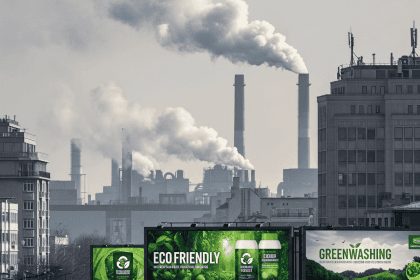
Greenwashing is the practice of making a product, company, campaign, or investment look more environmentally responsible than it really is. It can be obvious, like a fake “eco” label, or subtle, like highlighting one small recycled feature while hiding a much bigger environmental problem.
The confusing part is that not every sustainability claim is greenwashing. Some companies really do reduce waste, improve packaging, cut emissions, protect water, or redesign products to last longer. The problem begins when marketing becomes cleaner than the reality.
This guide explains what greenwashing means, how it works, common examples, and how to judge environmental claims without needing to become a full-time sustainability researcher.
What Is Greenwashing?
Greenwashing happens when environmental language creates a misleading impression. The company may use vague words, nature imagery, selective statistics, hidden trade-offs, weak labels, or emotional storytelling to make consumers feel that a purchase is better for the planet than it actually is.
The claim may be technically true but still misleading. A bottle may contain “50% less plastic” than an earlier version while still being single-use. A clothing brand may launch a small recycled collection while most of its business model depends on fast, disposable fashion. A fuel company may promote tree planting while its core emissions remain the larger issue.
Why Greenwashing Works
Greenwashing works because people are busy and most environmental claims are hard to verify quickly. A shopper may see green packaging, a leaf icon, and words like “natural” or “earth friendly” and assume the product is better. The claim feels easy to trust because it matches what the buyer wants to believe.
Companies also know that sustainability can influence loyalty, pricing, hiring, reputation, and investor attention. A greener image can be valuable even when the underlying change is small. That creates an incentive to make the message look stronger than the evidence.
Common Greenwashing Tactics
| Tactic | What it sounds like | What to ask |
|---|---|---|
| Vague language | Eco, green, earth safe, natural | Compared with what? Certified by whom? |
| Hidden trade-off | Recycled packaging, but wasteful product | Is the main impact addressed? |
| Irrelevant claim | Free of a chemical that was not used anyway | Does this claim actually matter? |
| Unverified label | Homemade green seal | Is there an independent standard? |
| Future promise | Net zero someday | Is there a near-term plan with measured progress? |
Greenwashing in Consumer Products
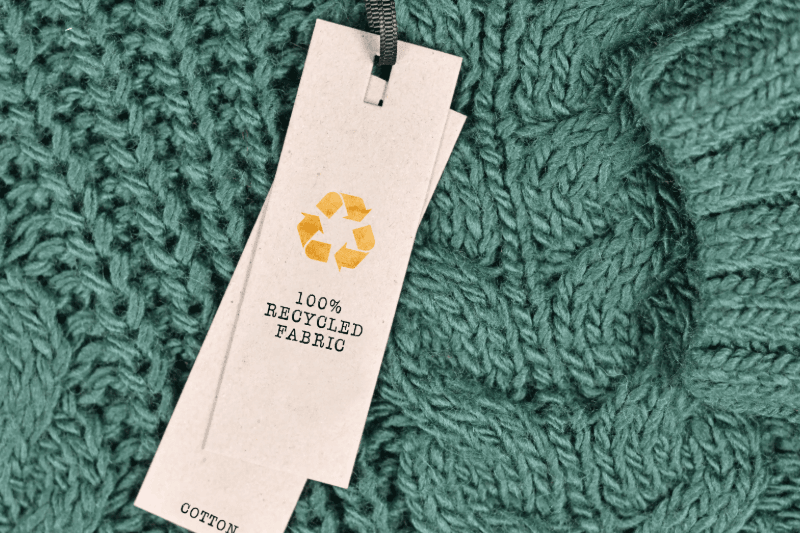
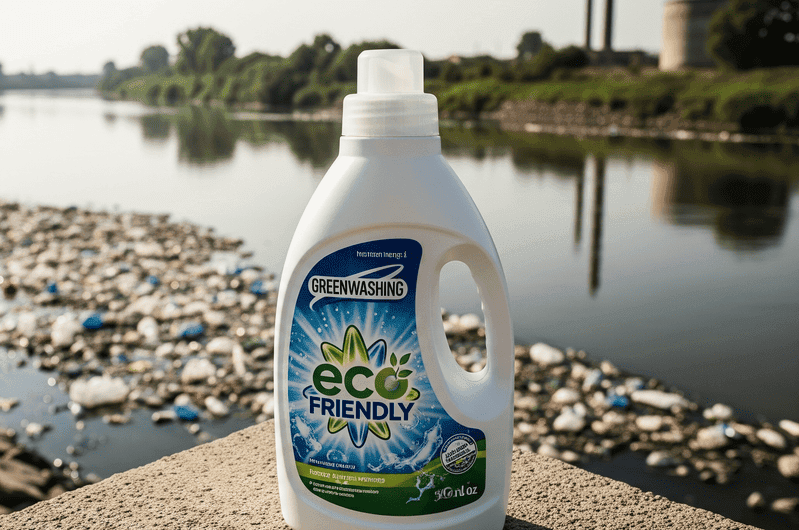
Consumer goods are full of small environmental claims. A cleaner may say plant-based. A shampoo may say natural. A snack package may show a forest. A shirt may mention recycled fibers. These claims can be useful, but only if they are specific enough to check.
A better claim gives numbers, boundaries, and context. “Made with 30% post-consumer recycled plastic in the bottle” is more useful than “green packaging.” “Refillable aluminum container with available refill pouches” is more useful than “planet friendly.” Specific language does not guarantee honesty, but it gives you something to evaluate.
Greenwashing in Energy and Climate Claims
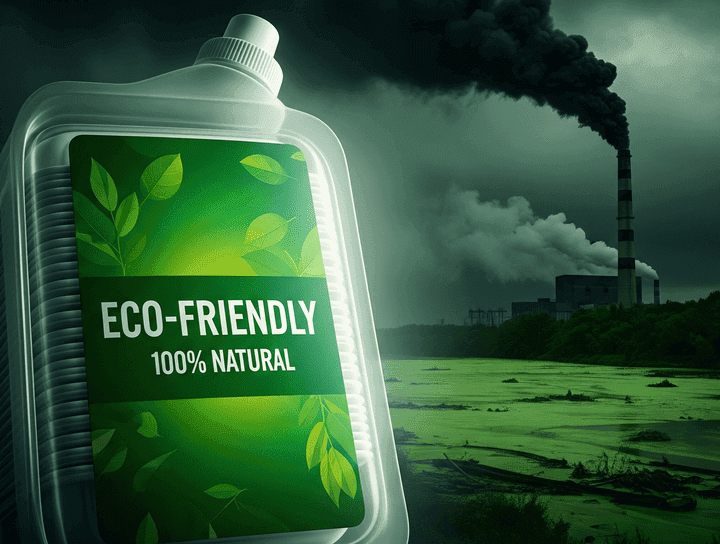
Energy-related greenwashing can be more serious because the scale is larger. A company may promote renewable projects, carbon offsets, tree planting, or low-carbon products while its main business continues to create high emissions. The issue is not always that the project is fake. The issue is whether the project is being used to distract from the larger footprint.
Offsets deserve special caution. A carbon offset may fund a real project, but the quality depends on whether the reduction is additional, measurable, permanent, and not counted twice. Offsets can help in some cases, but they should not replace direct emissions cuts when direct cuts are possible.
Greenwashing in Investing
Greenwashing can also appear in funds and investment products. A fund name may include sustainable, ESG, climate, impact, or responsible, but the holdings may still surprise investors. Sometimes the fund uses broad ratings that reward disclosure or relative sector performance rather than absolute environmental impact.
If this topic interests you, read why ESG scores can mislead investors. The short version is that a label is not enough. Investors should look at holdings, methodology, exclusions, voting behavior, fees, and whether the fund’s strategy matches their goal.
How to Spot Greenwashing Quickly
- Be cautious with vague words that have no measurable meaning.
- Look for numbers, dates, and comparisons.
- Ask whether the claim addresses the product’s biggest impact.
- Check whether the label is independent or self-created.
- Watch for nature images that are not supported by real details.
- Notice when a company promotes a tiny green project while avoiding its main footprint.
- Prefer durability, repair, reuse, and reduction over cosmetic packaging changes.
What Better Sustainability Claims Look Like
A stronger sustainability claim is specific, limited, and verifiable. It tells you what changed, where the data applies, what standard is used, and what is still not solved. The FTC Green Guides are a useful reference in the United States because they focus on avoiding deceptive environmental marketing claims.
Good claims also admit trade-offs. A company that says “This bottle uses less plastic, but it is still single-use, so we are testing refills” sounds more honest than a company that calls the same bottle “guilt-free.” Real sustainability work often has limits. Honest limits are better than perfect-sounding claims.
What Consumers Can Do
You do not need to investigate every purchase. Start with high-impact habits. Buy less when possible. Choose durable items. Repair before replacing. Refill when it truly reduces waste. Avoid single-use items when easy. Support companies that provide clear details instead of only green design.
For everyday waste reduction, see simple ways to ditch single-use plastic. The most reliable environmental action is often boring: use the item longer, waste less, and avoid buying things you do not need.
Greenwashing vs Imperfect Progress
It is also important to separate greenwashing from imperfect progress. A company can make a real improvement without solving everything. A package can use less plastic and still not be perfect. A shipping company can test electric vans while most of the fleet remains conventional. A brand can improve one supply-chain issue while still having work to do elsewhere.
The difference is honesty. Imperfect progress explains the limit. Greenwashing hides the limit. A useful claim says, “This change reduces one part of the impact, and here is what remains.” A weak claim tries to make one small improvement feel like a full environmental transformation.
Questions I Ask Before Trusting a Claim
When a product looks very green, I find it helpful to slow down and ask a few plain questions. Is the claim about the whole product or only the packaging? Is the claim about a small percentage or the main material? Is the company comparing the product to its older version or to a genuinely lower-impact alternative? Does the claim encourage me to buy something new when using what I already own would be better?
Those questions keep the topic practical. Greenwashing is not only a corporate ethics issue. It affects everyday buying decisions. The more specific the claim, the easier it is to trust. The more emotional and vague the claim, the more it deserves a second look.
Why Smaller Claims Can Be More Trustworthy
A modest claim is often more believable than a perfect one. “This refill reduces packaging for this product line” is easier to evaluate than “saving the planet.” “This fabric contains 40% recycled polyester” is clearer than “conscious fashion.” Smaller claims leave room for context, and context is where trust is built.
When a brand explains both progress and limits, the message feels less polished but more useful. That is usually a good sign. Real environmental work is rarely as clean as the advertisement.
The Claim, Proof, Tradeoff Test
When a sustainability claim sounds too polished, I find it easier to break it into three plain questions: what exactly is being claimed, what proof is offered, and what tradeoff is being hidden? That keeps greenwashing from becoming a vague accusation and turns it into a practical reading habit.
- Claim: Is the promise specific, or is it only a mood word like clean, natural, conscious, eco, or planet-friendly?
- Proof: Is there a clear standard, third-party certification, measured reduction, or transparent explanation?
- Tradeoff: Does the product still create waste, encourage overbuying, hide shipping impacts, or distract from a simpler repair/reuse option?
A weaker claim is not always dishonest, and an imperfect product is not automatically greenwashing. The warning sign is confidence without evidence: big environmental language paired with tiny, unclear, or unrelated proof.
- If a product pushes you to buy more in the name of being green, compare it with sustainable habits that actually stick; sometimes the better choice is a smaller routine, not a new product.
- If the claim is about food packaging or kitchen waste, test it against zero waste kitchen habits and ask whether it reduces repeat waste in normal use.
- If the claim leans on a material name, compare it with eco-friendly materials and look for durability, repairability, and end-of-life details.
- If the product is mainly a style upgrade, eco-conscious upcycling may be a better lens than buying a cleaner-looking replacement.
Scope note: this is educational consumer guidance, not legal, financial, investment, or certification advice. For investing, regulated claims, or business compliance, use the relevant official rules and professional guidance rather than a blog checklist.
Bottom Line
Greenwashing is misleading environmental marketing. It can make ordinary products look sustainable, make small improvements look bigger than they are, or make companies appear greener than their main business practices support.
The best defense is not cynicism. It is better questions. What exactly is being claimed? Is it measured? Is it independently verified? Does it address the biggest impact? If the answer is vague, the green image may be doing more work than the environmental improvement.