





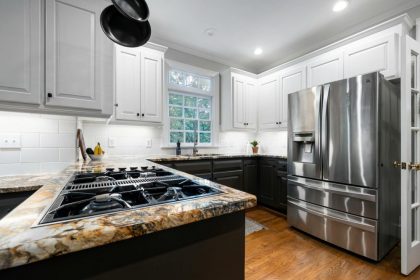
Induction cooktop vs gas is not just a taste argument. It is a practical home decision about cooking style, energy use, indoor air quality, cleaning, cookware, installation cost, and what feels natural in your kitchen. Gas has a long reputation for control and familiar flame feedback. Induction has become more serious because it is fast, efficient, easier to clean, and does not burn gas inside the home.
The better choice depends on how you cook. A person who uses cast iron daily, wants fast boiling, and cares about kitchen heat may love induction. Someone who cooks with round-bottom woks, loses power often, or already has a strong gas setup may prefer gas. The point is not to make every kitchen electric overnight. The point is to compare the tradeoffs clearly before you replace an appliance.
This guide keeps the comparison practical. It does not assume induction is automatically perfect or gas is automatically bad. It looks at the real daily differences that affect normal homes.
Quick Verdict
For most modern green-home upgrades, induction has the stronger long-term case. It transfers more heat into the cookware, keeps less waste heat in the kitchen, avoids direct combustion indoors, and is easier to clean. Gas still wins for people who strongly prefer flame cooking, already have gas infrastructure, use incompatible cookware, or need a cooking setup that feels familiar during power outages.
If you are remodeling, replacing an old range, or already moving toward cleaner home energy, induction deserves serious consideration. If your gas range is working well and replacement would require expensive electrical work, the decision is less obvious.
Induction vs Gas at a Glance
| Factor | Induction | Gas |
|---|---|---|
| Energy transfer | Very efficient because the pan heats directly | Less efficient because heat escapes around the pan |
| Cooking feel | Fast, precise, digital, responsive | Visible flame, familiar control, strong tradition |
| Indoor air | No combustion at the cooktop | Burns gas and can release combustion byproducts |
| Cleaning | Smooth glass surface, easier wipe-down | Grates and burners take more cleaning |
| Cookware | Needs magnetic-compatible cookware | Works with almost any heat-safe cookware |
| Power dependence | Needs electricity | May still work during some outages, depending on ignition and model |
This table explains why the choice is not one-dimensional. Induction is usually stronger for efficiency and indoor comfort. Gas is stronger for familiarity, cookware flexibility, and visual flame control.
How Induction Cooking Works
Induction uses electromagnetic energy to heat compatible cookware directly. The cooktop surface does not heat the pan the same way a radiant electric element does. Instead, the magnetic field interacts with the cookware and turns the pan itself into the heat source.
That is why induction can feel so quick. The energy goes into the pan instead of first heating a burner, grate, flame path, or large glass surface. When you change the setting, the pan responds quickly. When you remove the pan, heating stops.
ENERGY STAR’s electric cooking product guidance notes that induction transfers a much larger share of heating energy into cookware than gas cooking products and can offer quicker heat-up times. For a normal kitchen, that means faster boiling, less waste heat, and more precise low-to-high control.
How Gas Cooking Works
Gas cooking burns natural gas or propane at the burner. The flame heats the cookware from below, while some heat escapes around the pan into the kitchen. The visible flame gives many cooks confidence because they can see the heat level and adjust it instantly.
That familiarity is real. Gas is forgiving with cookware shape, works with many pan materials, and feels intuitive if you have cooked on it for years. It also performs well for techniques where flame shape and pan movement matter.
The tradeoff is that gas is combustion inside the kitchen. The flame is not just heat; it can also produce combustion byproducts. That does not mean every gas kitchen is unsafe, but it does mean ventilation and appliance condition matter.
Energy Efficiency and Kitchen Heat
Induction usually has the advantage on efficiency because it heats the cookware directly. Less energy spills into the surrounding air, which can make the kitchen feel cooler during cooking. That can matter in hot climates, small apartments, and homes where the kitchen already overheats.
Gas loses more heat around the sides of the pan. You can see this when flames curl beyond the cookware. That heat still enters the room, even if it does not help cook the food. In winter, extra kitchen heat may not feel like a problem. In summer, it can make the room less comfortable and add cooling load.
This is why induction fits well with a broader green home energy plan. The goal is not only to change one appliance. It is to reduce wasted energy across cooking, heating, cooling, water heating, controls, and backup power.
Cooking Control and Speed
Gas gives visual feedback. Many people like seeing the flame and making tiny adjustments by eye. It also works well with cookware that is lifted, tilted, or moved often. That is one reason some cooks still prefer it.
Induction gives fast response without the flame. It can boil water quickly, hold low heat well on good models, and reduce heat almost immediately when you turn it down. The learning curve is mostly psychological: you stop watching a flame and start trusting the setting.
If you simmer sauces, melt chocolate, boil pasta, sear in cast iron, or cook fast weeknight meals, induction can be excellent. If your cooking depends heavily on flame contact, charring, round-bottom wok technique, or visual burner feedback, gas may still feel better.
Indoor Air Quality
Indoor air quality is one of the strongest reasons people compare induction cooktop vs gas now. Induction does not burn fuel at the cooktop. Gas does. Combustion can produce pollutants such as carbon monoxide, nitrogen dioxide, and particles, especially when appliances are poorly adjusted, ventilation is weak, or the kitchen is small.
The EPA lists gas stoves among sources of combustion products and recommends reducing exposure through proper adjustment and outdoor-vented exhaust over gas stoves. That does not mean every gas stove must be replaced tomorrow, but it does mean the ventilation question is not optional.
EPA’s combustion products guidance is a useful baseline: if you keep gas, use proper ventilation, keep appliances maintained, and never use a gas stove to heat the home. If you switch to induction, you remove that direct combustion source from the cooking surface, though cooking itself can still create smoke, particles, and odors that need ventilation.
Cookware Compatibility
Cookware is the most practical induction surprise. Induction needs magnetic cookware. Cast iron, enameled cast iron, and many stainless-steel pans work. Aluminum, copper, glass, and some non-magnetic stainless pans do not work unless they have an induction-compatible base.
The easy test is a magnet. If a magnet sticks firmly to the bottom of the pan, it is likely induction compatible. If it does not, the pan probably will not work.
Gas is more flexible. It works with almost any heat-safe cookware because the flame heats the pan physically. If your kitchen has expensive copper pans, rounded cookware, or specialty pieces that are not induction compatible, the switch may require more than just a new cooktop.
Cleaning and Maintenance
Induction usually wins cleaning. The surface is flat, and because the cooktop itself does not stay as hot as a gas grate, spills are less likely to burn on as aggressively. You still need to protect the glass from scratches and avoid dragging rough cookware across it, but daily wipe-down is simple.
Gas ranges have grates, burner caps, ports, knobs, and flame openings. They can last a long time, but cleaning is more physical. Grease and food can collect around burners, and clogged or poorly adjusted burners can affect flame quality.
For some people, cleaning alone is enough to push the decision toward induction. For others, durable grates and familiar burners are worth the extra maintenance.
Cost and Installation
Cost depends on the home. If you already have the right electrical circuit, induction can be straightforward. If you need panel work, a new circuit, outlet changes, or countertop adjustments, installation cost can rise. Portable single-burner induction units are cheap enough to test the cooking style, but a full range or cooktop is a larger decision.
Gas can be cheaper to keep if the line is already there and the appliance is working. But adding a new gas line, improving ventilation, or repairing old appliances can change the math. Gas also has ongoing fuel cost, while induction shifts cooking into the electric side of the home.
If your home is already moving toward electric appliances, solar, battery backup, or smarter energy controls, induction may fit the long-term direction. My article on smart energy controls explains why appliance timing and power use matter more as homes become more electric.
Safety Differences
Induction has a few safety advantages. There is no open flame, the burner only works with compatible cookware in place, and the surface cools faster than many traditional cooktops. That can be helpful around children, small kitchens, and distracted cooking.
But induction is not risk-free. Pans still get very hot. Hot food still burns. Glass surfaces can crack if abused. People with some implanted medical devices should follow medical/device manufacturer guidance around electromagnetic appliances.
Gas has familiar risks: open flame, combustion, gas leaks, carbon monoxide concerns, and the possibility of using the stove unsafely during outages. A maintained gas range with outdoor-vented ventilation is very different from an old, poorly adjusted range in a tight kitchen.
When Induction Makes More Sense
- You want better energy efficiency. Induction transfers more useful heat into the pan.
- You care about indoor air quality. It avoids combustion at the cooktop.
- You want easier cleaning. The smooth glass surface is simpler day to day.
- You cook in a hot kitchen. Less waste heat can make cooking more comfortable.
- Your cookware is compatible. Cast iron and magnetic stainless work well.
- You are electrifying the home. Induction fits with cleaner home energy upgrades.
When Gas Still Makes More Sense
- You strongly prefer flame cooking. Some techniques and habits feel better on gas.
- Your cookware is not induction compatible. Replacing pans adds cost.
- Electrical upgrades would be expensive. Panel or circuit work can change the decision.
- You cook with specialty cookware. Some wok and round-bottom techniques are easier with gas.
- Your gas setup is already excellent. A working range with strong ventilation may not need urgent replacement.
A Practical Decision Checklist
Before choosing, answer these questions.
- Do your main pans pass the magnet test? If not, add cookware cost to the induction budget.
- Can your electrical system support induction? Check circuit, panel, outlet, and installer requirements.
- How good is your ventilation? Gas needs outdoor-vented exhaust more than many people realize.
- What bothers you more: flame loss or cleaning? Cooking feel is personal.
- Do you want a full switch or a test run? A portable induction burner can help you try the experience first.
- Are you planning other energy upgrades? Induction may fit better if you are already improving home energy systems.
This also connects with everyday sustainability. The most sustainable appliance is not only the one with the best spec sheet. It is the one you will use well, maintain properly, and fit into the rest of your home. My broader guide to everyday sustainability habits takes the same practical approach: choose changes that actually stick.
Bottom Line
Induction cooktop vs gas comes down to priorities. Induction is usually better for energy efficiency, kitchen comfort, cleaning, safety around open flame, and reducing combustion inside the home. Gas is still strong for familiar flame control, cookware flexibility, specialty cooking, and homes where electrical upgrades would be expensive.
If you are replacing an appliance, remodeling, or moving toward a cleaner electric home, induction is the option I would evaluate first. If your current gas range works well, ventilation is strong, and you love flame cooking, there may be no urgent reason to switch immediately.
The best decision is not ideological. It is practical: compare your cookware, electrical setup, ventilation, cooking style, budget, and long-term home energy plan. That gives you a clearer answer than any simple induction is better or gas is better claim.
Home safety note: This article is educational and not electrical, medical, building-code, or appliance installation advice. For new circuits, gas work, ventilation changes, or health-specific concerns, use qualified professionals and current manufacturer guidance.