




Are you tired of worrying about your electric vehicle’s range, waiting ages for your phone to charge, or fretting over battery longevity? If you’ve ever wished for a battery that could do more, faster, and safer, then you’re exactly who this post is for. We’re diving deep into the world of solid-state batteries, a next-gen battery technology poised to revolutionize energy storage as we know it. This isn’t just a slight improvement; it’s a fundamental shift promising to unlock incredible potential across everything from EVs to our everyday gadgets. By the end of this post, you’ll understand why solid-state battery tech is a game-changer and what to expect as it moves closer to broad adoption.
TL;DR: Solid State Batteries in a Nutshell
- Safer: No flammable liquid electrolyte means vastly reduced fire risk.
- More Energy: Higher density allows for longer range in EVs or extended device life.
- Faster Charging: Designed for quicker replenishment of power.
- Longer Lifespan: Potentially more charge cycles before degradation.
- Still Developing: Great promise, but manufacturing challenges and cost are current hurdles.
What Makes Solid State Batteries Different?
At the heart of any battery is how it moves energy. Traditional lithium-ion batteries rely on a liquid electrolyte to shuttle ions between the anode and cathode. Solid State Batteries, as their name suggests, replace this liquid with a solid material. This might seem like a small change, but it unlocks a cascade of significant advantages, pushing advanced battery solutions into a new era.
Enhanced Safety
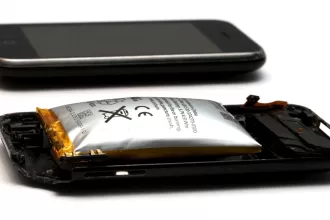
One of the most compelling aspects of solid-state battery tech is its inherent safety. The liquid electrolytes in conventional batteries are flammable and can pose risks, especially if damaged or overcharged. You can learn more about these concerns with lithium-ion battery explosion risks. By swapping this out for a solid, non-flammable material, the risk of thermal runaway, fire, and explosions is dramatically reduced. This is a massive win for electric vehicle batteries and consumer electronics alike.
Higher Energy Density
Imagine packing more power into the same, or even smaller, space. Solid State Batteries allow for greater energy density, meaning they can store significantly more energy per unit of volume or weight. For electric vehicles, this translates directly into longer driving ranges. For your smartphone or laptop, it means longer usage between charges without making the device bulkier. This improved efficiency is a hallmark of future energy storage.
Faster Charging Capabilities
Waiting hours for a full charge could become a thing of the past. The solid electrolyte in these next-gen battery technology designs can potentially allow for much faster ion transfer, paving the way for significantly reduced charging times. This would be a game-changer for the practicality of electric vehicles, bringing their refueling times closer to that of traditional gasoline cars.
Key Advantages of Solid State Batteries
When we talk about the revolution, it’s about the tangible benefits these advanced battery solutions bring. Here’s what sets them apart:
- Increased Cycle Life: The robust nature of solid electrolytes often leads to batteries that can endure more charge and discharge cycles before their capacity degrades.
- Broader Temperature Range: Many solid-state designs show better performance and stability across a wider range of temperatures compared to their liquid-electrolyte counterparts.
- Smaller Footprint: With higher energy density, devices and vehicles can be designed to be lighter and more compact while maintaining or increasing power.
Solid State Battery Readiness Assessment
Understanding where solid-state battery tech stands helps manage expectations. We can score its current market readiness on a scale of 1 to 5, where 1 is early research and 5 is widespread industry standard.
Score 1: Early Research & Fundamental Challenges
Threshold: Basic material science exploration, lab-scale prototypes, significant cost barriers, fundamental performance issues (e.g., poor conductivity, anode/electrolyte interface problems). Not commercially viable.
Score 2: Pilot Production & Niche Applications
Threshold: Small-scale manufacturing, limited proof-of-concept products (e.g., medical implants, specialized sensors), high unit cost, performance still not competitive with mature tech for general use cases. Key challenges being addressed.
Score 3: Emerging Market & Limited Commercialization
Threshold: Initial integration into high-value, low-volume products (e.g., premium electric vehicle models, specialized defense applications), cost remains high but showing downward trend. Manufacturing processes are improving, but scalability is still a concern.
Score 4: Broad Adoption & Competitive Alternative
Threshold: Widespread use in mainstream electric vehicles and high-end consumer electronics. Cost is competitive with, or offers significant advantages over, traditional lithium-ion for many applications. Supply chains are robust, and manufacturing is scalable.
Score 5: Industry Standard & Dominant Technology
Threshold: Solid State Batteries are the default choice for most energy storage applications. They offer superior performance, safety, and cost-effectiveness. A mature ecosystem for manufacturing, deployment, and recycling is fully established.
Consumer & Industry Adoption Factors
While the tech is exciting, several factors need to align for solid-state batteries to truly become mainstream.
Cost Parity
Currently, manufacturing solid-state battery tech is more expensive than traditional lithium-ion. Achieving cost parity or offering such significant advantages that the higher cost is justified will be critical for mass adoption, especially for electric vehicle batteries.
Manufacturing Scalability
Developing the technology is one thing; producing billions of cells efficiently and reliably is another. New manufacturing processes and infrastructure are required to scale up production to meet global demand for future energy storage solutions.
Supply Chain Reliability
Ensuring a consistent and ethical supply of the necessary raw materials for solid-state battery production is vital. Establishing robust supply chains will prevent bottlenecks and price volatility as the technology grows.
Recycling Infrastructure
As with any new battery technology, developing effective and sustainable recycling methods for solid-state cells from the outset is crucial for environmental responsibility and resource management.
Common Mistakes When Discussing Solid State Batteries
- Overestimating Imminent Availability: Believing they’ll be in every new car next year. Realistically, widespread adoption takes time.
- Ignoring Manufacturing Challenges: Focusing only on lab results and not the complexities of mass production.
- Assuming a Drop-In Replacement: Solid-state cells might require new battery management systems or vehicle architectures.
- Underestimating Cost Hurdles: For many applications, price will still be the deciding factor.
- Confusing Prototypes with Production: Lab breakthroughs are exciting, but a long road to commercialization often follows.
FAQ
Q: Are solid-state batteries available commercially today?
A: While some niche applications and very limited prototypes exist, widespread commercial availability, particularly in mainstream electric vehicles and consumer electronics, is still some years away. Development is ongoing, with significant progress being made.
Q: Are solid-state batteries truly safer than lithium-ion?
A: Yes, in principle. By replacing the flammable liquid electrolyte with a solid, non-flammable material, the risk of thermal runaway, fires, and explosions that can plague conventional lithium-ion batteries is significantly reduced, making them inherently safer.
Q: How much faster will solid-state batteries charge?
A: The exact charging speed depends on the specific design and materials used, but solid-state batteries have the potential for much faster charging rates, with some research indicating it could be significantly quicker than current lithium-ion technology. This would drastically reduce the time needed to ‘refuel’ electric vehicles.
Q: Will solid-state batteries make my phone last longer?
A: Absolutely. Due to their higher energy density, solid-state batteries can store more power in the same or even smaller volume, which translates directly to a longer operating time for devices like smartphones and laptops, or allows for thinner designs with the same battery life.
Next Steps
- Stay informed about major announcements from leading battery manufacturers and automotive companies.
- Look for initial pilot programs or premium products that begin integrating solid-state battery tech.
- Consider the long-term implications for grid storage and renewable energy integration as these advanced battery solutions evolve.
- Support initiatives that foster sustainable and responsible development of future energy storage technologies.