





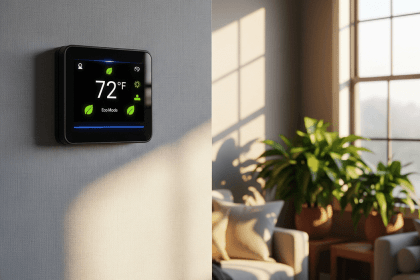
Smart home tech is everywhere, but not every gadget delivers real value. A smart thermostat is one of the few upgrades that can be genuinely useful if your home, HVAC system, and usage habits are a good fit.
In this guide, you’ll learn what a smart thermostat is, how it works, when it can save money (and when savings are limited), how installation works, and what to check before buying one.
What Is a Smart Thermostat?
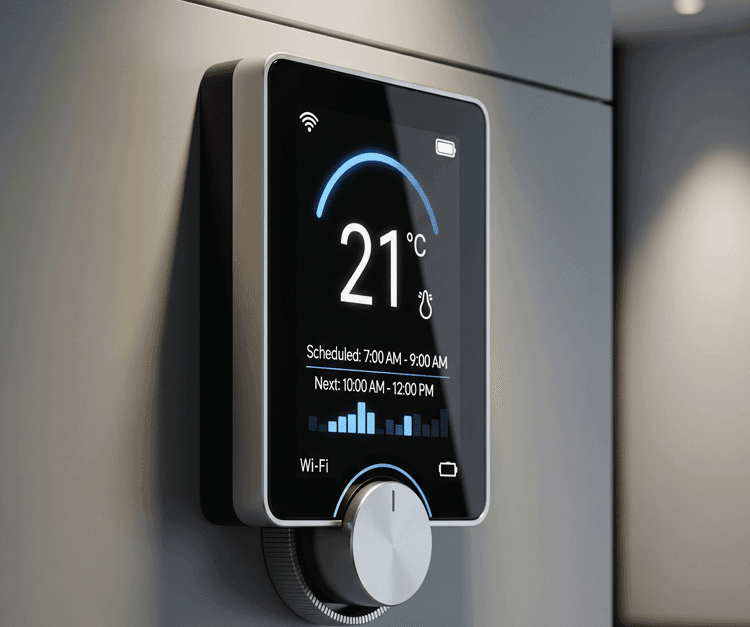
A smart thermostat is a thermostat that helps manage your home’s heating and cooling automatically using features like scheduling, occupancy detection, app control, and usage insights.
Unlike a traditional thermostat that you adjust manually, a smart thermostat can:
- follow a schedule,
- reduce heating or cooling when you’re away,
- let you control temperature from your phone,
- and in some cases adapt to your patterns over time.
Many models connect to Wi-Fi, so you can adjust settings remotely, receive alerts, and review energy usage trends.
Why Smart Thermostats Became So Popular
They’re popular because they combine comfort + convenience + energy control in one device. Instead of leaving your HVAC system running at full comfort settings all day, a smart thermostat helps you use energy more intentionally.
That said, popularity doesn’t automatically mean large savings for everyone. Results depend on how your system is used.
Where to Compare Smart Thermostats (US)
If you want to compare current prices, customer reviews, and available models in one place, check smart thermostats on Amazon US
Disclosure: This page may contain affiliate links, which means we may earn a commission at no extra cost to you.
Do Smart Thermostats Really Save You Money?
Yes they can save money, but the results vary a lot depending on your home and how you use your HVAC system.
The biggest savings usually come from reducing unnecessary heating and cooling when no one is home, overnight, or during long periods away.
What affects your real savings?
Your actual savings depend on factors like:
– Climate (hotter/colder regions often have more savings potential)
– Home insulation and air leaks
– HVAC system type and efficiency
– How often the home is empty
– How consistently you use schedules or automation features
When savings are usually stronger
You’re more likely to see meaningful savings if:
– your home is empty for work/school hours,
– you currently run heating/cooling at one constant comfort setting,
– and you actively use schedules or geofencing.
When savings may be smaller
Savings may be limited if:
– someone is almost always home,
– your settings are already well-managed,
– your HVAC system needs maintenance,
– or your home has major insulation/air leakage issues.
A smart thermostat can reduce waste, but it works best as part of a broader efficiency setup (good settings, HVAC maintenance, and basic air sealing).
For realistic expectations, it helps to compare claims with government energy-efficiency guidance and utility program resources, which usually explain savings as conditional rather than guaranteed.
How a Smart Thermostat Saves Money (In Practice)
Here’s where the savings typically come from:
1) Scheduling
You set lower-demand temperatures during times when comfort isn’t needed (work hours, overnight, vacations).
2) Remote Control
Forgot to change the temperature before leaving? You can fix it from your phone instead of wasting energy all day.
3) Occupancy or Geofencing Features
Some models can reduce heating/cooling when the house is empty, then restore comfort before you return.
4) Energy Feedback and Usage Reports
Many models show trends and usage summaries, which can help you spot wasteful patterns and adjust schedules.
Is a Smart Thermostat Worth It for Your Home?
Before buying, use this quick decision framework.
It’s Probably Worth It If:
- You have a regular daily schedule
- Your home is empty several hours per day
- You want remote control and automation
- You’re comfortable using an app
- Your HVAC system is compatible
It May Not Be a Priority If:
- You’re home most of the day and already manage temperatures carefully
- Your HVAC system has compatibility issues and installation costs are high
- Your bigger problem is insulation, duct leakage, or an aging HVAC unit
- You’re renting and can’t modify thermostat wiring easily
Bottom line: In many homes, a smart thermostat is a smart upgrade — but in some homes, air sealing or HVAC maintenance will deliver better savings first.
How to Install a Smart Thermostat (And When to Call a Pro)
For many homes, installation is manageable as a DIY project. But compatibility matters. Before installation, make sure the thermostat model is compatible with your HVAC system and wiring setup (especially C-wire requirements).
If you’re unsure about wiring labels or system type, don’t guess incorrect wiring can prevent heating/cooling from working properly.
Before You Start
- Turn off power at the breaker
- Confirm your HVAC system type (furnace, heat pump, multi-stage, etc.)
- Check whether the thermostat supports your system
- See whether you have a C-wire (common wire), or whether an adapter is needed
Basic Installation Steps
Run system testing to make sure heating/cooling responds correctly.
Turn off power at the breaker for safety.
Remove the old thermostat and label/take a photo of the existing wires.
Check compatibility and wiring requirements (especially C-wire support).
Mount the new base plate and connect wires to the correct labeled terminals.
Attach the thermostat unit and restore power.
Connect to Wi-Fi and complete setup in the mobile app.
When You Should Call a Professional
Call an HVAC technician if you have:
- a heat pump with auxiliary heat,
- multi-zone systems,
- unclear or nonstandard wiring,
- older HVAC equipment,
- or any uncertainty about safe wiring.
DIY can be straightforward, but a wrong wiring setup can cause system issues. If you’re unsure, don’t guess.
What to Check Before Choosing the Best Smart Thermostat for Your Home
There isn’t one “best” model for everyone. The best choice depends on your system and priorities.
1) HVAC compatibility (most important)
Before comparing features, confirm the thermostat supports your system type and wiring.
Before buying any model, use the manufacturer’s compatibility checker to confirm it supports your HVAC system and wiring for example, the Google Nest compatibility checker, ecobee compatibility resources, or Honeywell Home / Resideo thermostat compatibility guidance.
2) Home size and hot/cold spots
If some rooms are consistently warmer or colder, room sensors may matter more than premium automation features.
3) Smart home ecosystem
Check whether it works with Google Assistant, Alexa, or Apple HomeKit if voice control or routines matter to you.
4) App quality and scheduling
A clean app and reliable scheduling often matter more in daily use than flashy design.
5) Energy reports and usage insights
If your goal is saving money, choose a model that gives you useful energy data and not just remote control.
Popular Smart Thermostat Options (And Who They Fit Best)
Here are a few commonly considered options (always verify current specs and compatibility before buying).
Always verify current specs and HVAC compatibility before buying, since model features and supported systems can change over time.
- Google Nest Learning Thermostat
Often chosen by users who want automated schedule learning and a polished design. - ecobee Smart Thermostat (with room sensor support)
Often a good fit for homes with uneven room temperatures or users who want more room-level comfort management. - Honeywell Home / Resideo Smart Thermostat options
Often considered by users looking for practical scheduling and smart features across different price points.
Important: Model names, feature sets, and compatibility details can change over time, so always check the manufacturer’s compatibility tool before purchase.
Common Mistakes That Reduce Smart Thermostat Savings
Even a good thermostat won’t help much if it’s used poorly. Common mistakes include:
- Leaving the default settings unchanged
- Using automation features inconsistently
- Ignoring HVAC maintenance (dirty filters, service issues)
- Expecting the thermostat to solve insulation or draft problems
- Choosing a model before checking compatibility
Fix these first, and your results are usually better.
Did You Know?
Savings Note (Realistic Expectations)
Savings estimates vary by home, climate, HVAC system, and usage habits. Government and efficiency-program guidance often presents savings as conditional estimates rather than guaranteed results, so it’s best to treat advertised savings ranges as potential outcomes, not fixed numbers.
Final Thoughts: Is a Smart Thermostat Worth It?
Final Thoughts: Is a Smart Thermostat Worth It?
For many households, yes a smart thermostat is a practical upgrade that can improve comfort and reduce energy waste. But the real value depends on your home setup, daily routine, and how you use it.
If your goal is lower energy bills, the smartest approach is:
- confirm compatibility,
- install and configure it properly,
- use schedules/geofencing consistently,
- and pair it with basic home efficiency improvements (like filter maintenance and air sealing).
That’s how you get realistic, measurable results not just a smarter-looking wall device.
Smart thermostats are just one part of a more efficient home setup. You can also explore our guide to eco-friendly home inventions for other upgrades that may help reduce energy waste.