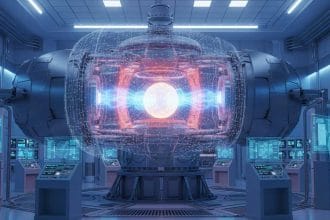





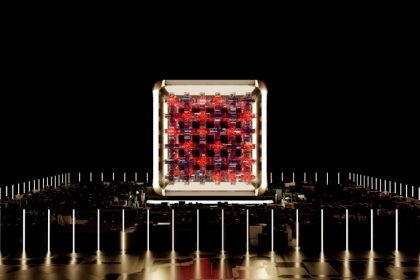
Remember those clunky supercomputers from old movies? Forget them. We’re on the cusp of a completely different kind of computing, something called quantum computing. it goes beyond making our current computers faster; it’s about rethinking how computers solve problems from the ground up. Think of it less like upgrading your car to a faster model and more like inventing an airplane.
This new technology promises to tackle challenges that are currently impossible for even the most powerful traditional supercomputers. From discovering new medicines to designing more efficient materials, the potential is huge. Understanding the basics now helps us grasp the incredible shifts this future quantum technology will bring into our lives. Let’s break down what quantum computing means for our future, in plain English.
TL;DR
- Quantum computing uses principles of quantum mechanics to process information.
- It’s a new type of computer, not just a more powerful version of what we have today.
- It will unlock solutions to problems currently unsolvable, like new drug discovery and complex optimization.
- While still in early stages, rapid advancements promise significant ‘Quantum computing impact’ across industries.
- Don’t expect it to replace your laptop, but it will power critical behind-the-scenes transformations.
- Key sectors like healthcare, finance, logistics, and cybersecurity will see profound changes.

What Exactly Is Quantum Computing?
basically, quantum computing steps beyond the ‘bits’ our current computers use. A regular computer bit is either a 0 or a 1. Simple. A quantum computer, however, uses ‘qubits’. These qubits can be 0, 1, or both simultaneously (a state called superposition). Imagine a coin spinning in the air – it’s neither heads nor tails until it lands. That’s a bit like a qubit in superposition, holding multiple possibilities at once.
Then there’s entanglement. This is where qubits become linked, no matter how far apart they are. If you measure one entangled qubit, you instantly know the state of the other. This strange connection allows quantum computers to process vast amounts of information in ways classical computers simply can’t. It’s like having a team of thousands of highly interconnected problem-solvers working on a puzzle all at once, rather than one person trying every possible solution one by one.
This unique approach means quantum machines are built to solve specific, highly complex problems that involve many variables interacting in intricate ways. We’re talking about calculations that would take today’s supercomputers billions of years. The ‘Quantum computing future’ hinges on harnessing these unique properties reliably.
- Pro-Tip: Don’t get hung up on the deep physics. Just remember that qubits can exist in multiple states at once and be linked, giving them immense parallel processing power for certain problems.
- Common Pitfall: Thinking a quantum computer is just a ‘faster’ version of your laptop. It’s an entirely different kind of machine for different kinds of problems.
How Quantum Power Changes Things
The implications of this next-gen computing power are vast. We’re not talking about minor improvements; we’re talking about fundamental shifts in how we approach some of the world’s toughest challenges.
Medicine and Materials Science
Imagine designing new drugs at a molecular level with unprecedented precision. Quantum computers can simulate molecular interactions far more accurately than anything we have today. This could lead to cures for currently untreatable diseases or the creation of revolutionary materials, like superconductors that work at room temperature, making energy transmission incredibly efficient. The ‘Future quantum technology’ here is about discovery.
Artificial Intelligence and Machine Learning
Quantum computing promises to turbocharge AI. Algorithms that currently take ages to train could be optimized much faster. This means more sophisticated AI for everything from image recognition to natural language processing, making our smart devices and automated systems truly intelligent. This could fundamentally transform AI and data security, ushering in new levels of predictive analysis and data protection.
Finance and Logistics
For industries like finance, quantum algorithms could optimize investment strategies, detect fraud with greater accuracy, and manage complex portfolios. In logistics, think about incredibly efficient delivery routes, optimizing global supply chains, and reducing waste. These are all problems that involve countless variables and interactions, perfect for quantum processors.
- Pro-Tip: Look for how quantum breakthroughs will impact industries that rely heavily on optimization, simulation, and pattern recognition. That’s where the biggest initial gains will be.
- Common Pitfall: Expecting immediate, personal-level changes. Most initial quantum benefits will be felt through industrial and scientific advancements before trickling down to the consumer.
Everyday Life with Quantum Tech
While you won’t be buying a quantum laptop anytime soon, the ‘Everyday quantum benefits’ will still touch your life in profound ways. consider this: better batteries for your electric car, more accurate weather forecasts that save lives and improve agriculture, personalized medicines tailored to your unique genetic makeup, and incredibly secure communication that protects your data from even the most advanced hackers.
Even the development of new, more sustainable materials for everything from buildings to clothing could be accelerated. Your smart home devices might eventually rely on quantum-enhanced AI for more intuitive and proactive assistance. It’s about creating a future where complex problems are no longer bottlenecks but solvable challenges, leading to a safer, healthier, and more efficient world for everyone.
Common Misconceptions
- Replacing all computers: Quantum computers are specialized tools, not general-purpose replacements for your phone or PC. They excel at specific, complex tasks.
- Just faster computing: It’s a different way of processing, not merely speed. It can solve problems classical computers can’t, even with infinite time.
- Science fiction: Quantum computers exist today in labs and are constantly advancing, even if they’re not yet widespread or fully stable.
- Instant impact: While progress is rapid, widespread commercial and everyday application is still some years away. It’s a journey, not a switch.
What’s Next for Quantum Computing?
The field of quantum computing is still relatively young, often compared to the early days of classical computing in the 1940s and 50s. Scientists and engineers around the globe are racing to build more stable, powerful, and error-corrected quantum processors. Overcoming the challenges of decoherence (where qubits lose their quantum properties) and scaling up the number of qubits are major hurdles.
However, the pace of ‘Quantum processor advancements’ is incredible. Governments and private companies are investing billions, recognizing the strategic importance of this technology. We’re likely to see significant breakthroughs in the coming years that will push quantum computing from the lab into more practical applications, driving innovation across countless sectors.
Next Steps
Staying informed about quantum computing doesn’t require a physics degree. Here are a few ways to keep up:
- Follow reputable science and tech news outlets for updates on new breakthroughs.
- Look for simplified explanations from universities or research institutions online.
- Consider watching introductory videos or documentaries about the topic.
- Understand that this isn’t a fad; the ‘Next-gen computing power’ it promises is real and transformative.