





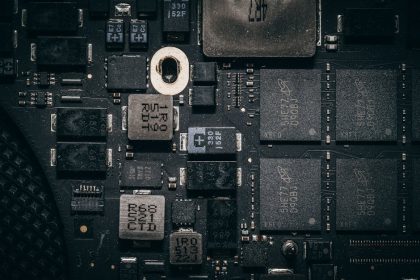
Your phone was just for calls? And computers were big, bulky boxes? A lot has changed, thanks to the tiny brains inside them: silicon chips. These little powerhouses are everywhere – from your smartwatch to the massive data centers that run the internet. But what’s coming next? We’re on the cusp of a whole new era for these incredible components, and it’s going to change everything, again. Get ready to peek into the fascinating world of future silicon chips.
TL;DR
- Future chips will be significantly smaller, faster, and more energy-efficient than today’s.
- We’re moving beyond traditional silicon, exploring new materials and 3D designs.
- Specialized chips are emerging to handle demanding tasks like AI and quantum computing.
- These innovations promise to transform everyday devices, vehicles, medicine, and more.
- Manufacturing these advanced semiconductor tech components presents new engineering challenges.
- The push is towards more sustainable and secure chip innovation future.

Beyond the Basics: Why Chips Need to Evolve
For decades, we’ve relied on silicon. It’s been the workhorse of the digital age, letting us pack more and more transistors onto a single chip, making our devices faster and more powerful. This trend, often called Moore’s Law, meant we could reliably expect improvements every couple of years. But physics is a tough boss, and we’re starting to hit some fundamental limits with traditional silicon. Transistors are already almost atom-sized, and it’s getting harder and harder to make them smaller and keep them cool.
That’s why engineers and scientists worldwide are racing to find new solutions. The demand for processing power isn’t slowing down – quite the opposite. We need chips that can handle ever more complex tasks, from artificial intelligence running on our phones to vast cloud computing networks. This means we’re looking at a fundamental shift in how we design, build, and even think about these crucial components. It’s not just about incremental improvements anymore; it’s about rethinking the entire approach to powering our future.
Shrinking Down, Speeding Up: The Next-Gen Challenge
Even with the limits of silicon, pushing the boundaries of miniaturization is still a major focus. We’re talking about manufacturing processes that measure features in angstroms – that’s even smaller than nanometers! The goal is to cram even more components into the same tiny space, increasing density and, theoretically, performance.
- Pro-Tip: Don’t just look at ‘gigahertz’ for speed. Modern chips gain performance through clever architecture, like specialized cores and efficient data pathways, not just raw clock speed.
- Common Pitfall: Assuming smaller chips automatically mean less heat. While efficiency improves, packing more power into a tiny space still generates heat, requiring innovative cooling solutions.
But raw miniaturization isn’t the only game in town. Next-generation microprocessors are also about doing more with less energy. As devices become more portable and battery life becomes a key concern, making chips that perform complex calculations without draining power is paramount. This involves smart design choices at every level, from the materials used to the way different parts of the chip communicate.
New Materials and Designs: The Innovation Frontier
This is where things get really exciting, moving beyond the familiar world of pure silicon. Scientists are exploring a whole range of new materials and radical designs to build advanced semiconductor tech:
- Pro-Tip: Keep an eye out for news on Gallium Nitride (GaN) and Silicon Carbide (SiC) in power adapters and electric vehicles. These materials are already making a difference in high-power electronics, offering greater efficiency and smaller form factors.
- Common Pitfall: Expecting these new materials to replace silicon overnight in every application. Silicon is incredibly versatile and cost-effective for many tasks; new materials often excel in niche, high-performance areas first.
Think about 3D stacking, where instead of building a chip flat, layers are stacked on top of each other like a tiny skyscraper. This dramatically shortens the distances signals have to travel, leading to faster communication and more compact designs. Then there’s the exploration of completely new materials like graphene, which is incredibly thin, strong, and conducts electricity much faster than silicon. We’re also seeing the rise of optical computing, which uses light instead of electrons to transmit data. This could revolutionize speed and energy efficiency within chips.
Perhaps one of the most intriguing developments is neuromorphic computing. These chips are designed to mimic the way the human brain works, processing information in a parallel, interconnected way rather than the traditional step-by-step method of current computers. Imagine chips that can “learn” and “think” more like us, opening up entirely new possibilities for artificial intelligence and machine learning.
The Brains Behind AI and Quantum Computing
Artificial intelligence, from smart assistants to facial recognition, relies heavily on specialized chips. Traditional CPUs (Central Processing Units) are good for general tasks, but AI needs brute-force parallel processing. This is where GPUs (Graphics Processing Units) and newer NPUs (Neural Processing Units) come in. These next-generation microprocessors are designed from the ground up to handle the massive mathematical operations required for AI, making our smart devices and cloud services incredibly powerful and responsive.
And then there’s quantum computing – a whole different beast. Quantum chips don’t operate on the same binary 0s and 1s as classical computers. Instead, they use quantum phenomena like superposition and entanglement, potentially unlocking solutions to problems currently impossible for even the most powerful supercomputers. While still in its early stages, the development of stable, powerful quantum chips is a major part of the chip innovation future, promising breakthroughs in medicine, materials science, and cryptography.
Real-World Impact: What This Means for You
It’s easy to get lost in the technical jargon, but the most important thing is how these future silicon chips will change our everyday lives. Think about your smartphone: it will become even more powerful, with instantaneous AI capabilities, hyper-realistic augmented reality, and battery life that lasts for days. Your smart home devices will anticipate your needs more accurately, and self-driving cars will navigate with even greater safety and precision.
Beyond consumer gadgets, these advancements will power breakthroughs in medicine, allowing for faster drug discovery, personalized treatments, and incredibly precise diagnostic tools. Climate modeling will become more accurate, helping us understand and combat environmental challenges. Scientific research across all fields will benefit from unprecedented computing power, accelerating discoveries that improve human well-being. In the end, these innovations are about making our world smarter, more connected, and more capable.
Common Misconceptions
- Moore’s Law is completely dead. It’s more accurate to say it’s evolving. While traditional scaling of transistors is slowing, innovation continues through new materials, 3D designs, and specialized architectures, keeping the spirit of progress alive.
- New materials will immediately replace all silicon chips. Silicon remains incredibly cost-effective and versatile for many applications. New materials will likely complement silicon, excelling in specific high-performance or specialized areas, rather than replacing it entirely in the short term.
- Chip innovation happens solely in labs. While research is crucial, the biggest challenge is often manufacturing these advanced chips reliably and economically at scale. The engineering required for mass production is immense.
- All chips are created equal. Modern computing relies heavily on specialized chips (like GPUs for graphics or NPUs for AI) working alongside general-purpose CPUs. This specialization is key to future performance gains.
Next Steps
- Stay Curious: Keep an eye on tech news and reputable science journals to track breakthroughs in advanced semiconductor tech.
- Look for Specifics: When buying new devices, check for details about the processor – look for terms like ‘neuromorphic,’ ‘3D stacked,’ or specific AI accelerators.
- Consider the Impact: Think about how these technologies might improve the things you care about, whether it’s healthcare, environmental solutions, or just a faster, more reliable phone.
- Understand Sustainability: As chips become more complex, their manufacturing can be resource-intensive. Support companies investing in greener production methods and energy-efficient designs for a better chip innovation future.