





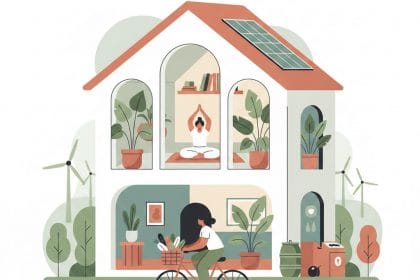
Many people want to live more sustainably, but most give up after a short time. Not because they don’t care, but because the advice they follow is often unrealistic. When sustainable living is presented as a complete lifestyle overhaul, it quickly becomes exhausting.
The key to long-term change is not motivation or discipline. It is simplicity. Sustainable habits only work when they fit into real life. This article focuses on habits that are easy to start, easy to repeat, and realistic to maintain over time.
Why Most Sustainable Advice Fails
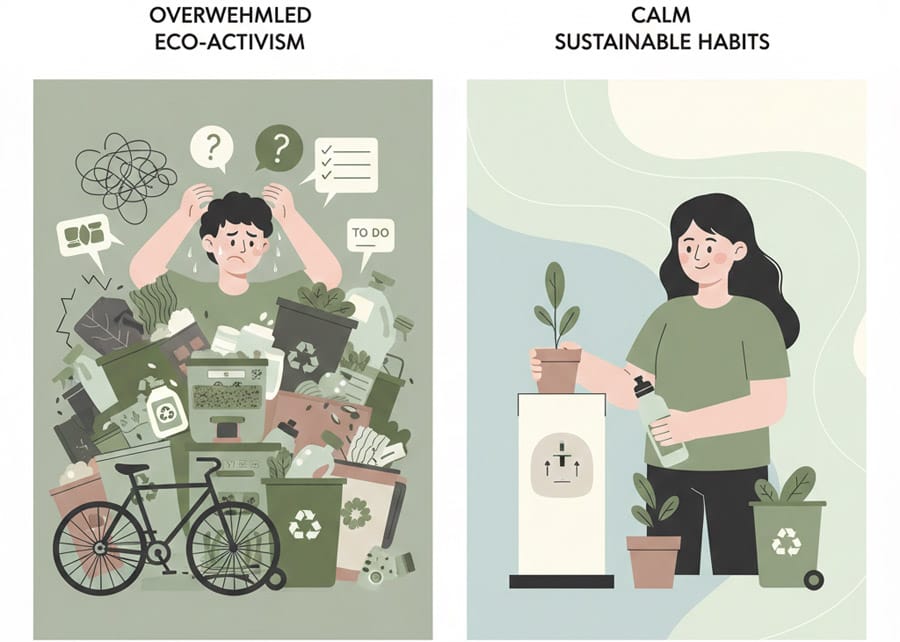
A lot of sustainability advice sounds good in theory but fails in practice. People are often encouraged to change everything at once: their shopping habits, energy use, diet, transportation, and consumption patterns. While well intentioned, this approach usually leads to burnout.
When habits feel forced or overwhelming, they don’t last. Sustainable living becomes more achievable when it is built around small daily habits that align with existing routines rather than replacing them entirely.
This is why focusing on consistency matters more than aiming for perfection.
What Makes a Habit Truly Sustainable
Not every eco-friendly action turns into a habit. For a habit to stick, it needs to meet a few basic conditions.
First, it must require low effort. Habits that demand constant attention or extra planning are easier to abandon. Second, it should fit naturally into an existing routine. When a habit is attached to something you already do, it becomes automatic faster. Finally, it should offer a visible or emotional benefit, even if the environmental impact is gradual.
Sustainable habits are not about doing more. They are about doing things differently in small, manageable ways.
Sustainable Habits That Fit Real Life
Sustainable living works best when it feels normal. Some of the most effective habits are also the least noticeable.
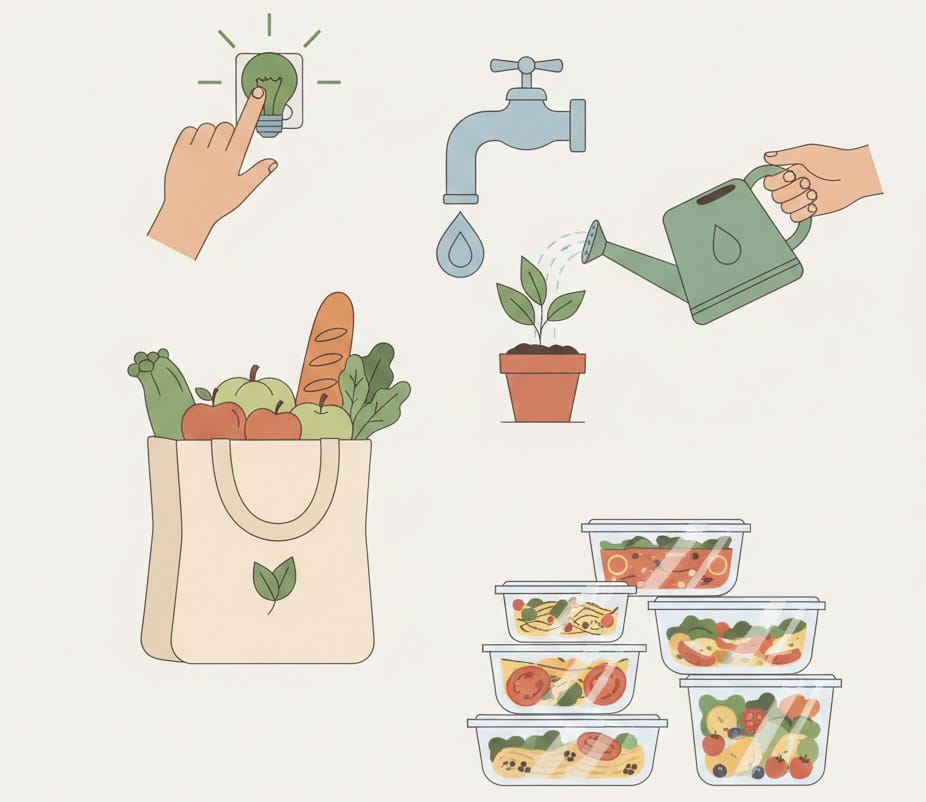
Energy use is a good place to start. Turning off lights when leaving a room, using natural daylight whenever possible, or unplugging devices that stay on standby reduces energy waste without affecting comfort.
Shopping habits also play an important role. Buying only what you need, choosing reusable bags, and avoiding excessive packaging are examples of eco-friendly habits that require little effort once they become routine.
Water consumption is another area where small changes matter. Shorter showers, turning off the tap while brushing your teeth, or fixing small leaks can significantly reduce water use over time.
Food waste is often overlooked. Planning meals, storing food properly, and using leftovers more creatively reduces waste without changing eating habits or requiring strict rules.
Sustainable Habits That Fit Real Life
Sustainable living works best when it feels normal. Some of the most effective habits are also the least noticeable.
Energy use is a good place to start. Turning off lights when leaving a room, using natural daylight whenever possible, or unplugging devices that stay on standby reduces energy waste without affecting comfort.
Shopping habits also play an important role. Buying only what you need, choosing reusable bags, and avoiding excessive packaging are examples of eco-friendly habits that require little effort once they become routine.
Water consumption is another area where small changes matter. Shorter showers, turning off the tap while brushing your teeth, or fixing small leaks can significantly reduce water use over time.
Food waste is often overlooked. Planning meals, storing food properly, and using leftovers more creatively reduces waste without changing eating habits or requiring strict rules.
Building a Sustainable Lifestyle Without Pressure
The biggest mistake people make is treating sustainability as a test they can fail. In reality, there is no finish line. Sustainable living is an ongoing process, shaped by daily decisions rather than big commitments.
It is perfectly fine to start small and move slowly. Progress matters more than perfection. Habits that fit your lifestyle are far more valuable than ambitious plans that never last.
By focusing on what you can realistically maintain, sustainable living becomes less stressful and far more effective.

Conclusion
Sustainable habits are not about doing everything right. They are about doing a few things consistently.
When habits are simple, realistic, and repeatable, they last. Over time, these small changes create meaningful impact without disrupting everyday life. Sustainable living works best when it feels natural, not forced.
The most effective habits are the ones you can actually stick to.