





Living sustainably often sounds harder than it really is. Many people believe that “going green” requires major lifestyle changes, expensive products, or radical sacrifices. When those expectations feel overwhelming, the result is usually the same: doing nothing at all.
The truth is far simpler. Sustainable living rarely starts with big promises. It starts with small, repeatable habits that quietly fit into everyday life. These habits may not look impressive on their own, but over time they create real and measurable impact.
This article explains why small daily habits matter more than large, one-time green decisions, and how sustainable living becomes easier when it is built into routine rather than treated as a challenge.
The Problem With “All or Nothing” Sustainability
One of the biggest barriers to sustainable living is the idea that it has to be done perfectly. People often assume that unless they can fully commit to an eco-friendly lifestyle, their efforts are meaningless.
This mindset creates an “all or nothing” trap. If the goal feels too big, motivation drops quickly. Behavioral research shows that habits are more likely to stick when they require low effort and minimal disruption to daily routines. Large lifestyle changes, even well-intentioned ones, are often abandoned because they demand too much at once.
Sustainability works best when it feels normal, not exceptional. When small actions are repeated consistently, they stop feeling like effort and start becoming automatic.
Many people are discouraged by misleading sustainability claims, often referred to as greenwashing.

Why Small Habits Create Bigger Environmental Impact
Small habits may seem insignificant, but their strength lies in consistency. Turning off unused lights, reducing food waste, or choosing reusable items may not feel impactful on a single day. Over weeks and months, however, these actions add up.
Behavioral science refers to this as habit stacking. Once a simple habit becomes automatic, it requires little mental energy. That makes it easier to add another small habit on top of it. Over time, sustainable behavior becomes part of daily life rather than a conscious decision.
More importantly, small habits tend to last. While big lifestyle changes often fade, simple routines are far more likely to remain. Sustainability is not about dramatic gestures. It is about reducing unnecessary waste and energy use in ways that people can realistically maintain.
Everyday Habits That Actually Make a Difference
Sustainable living does not require perfection. It requires awareness and consistency. Some of the most effective habits are also the simplest.
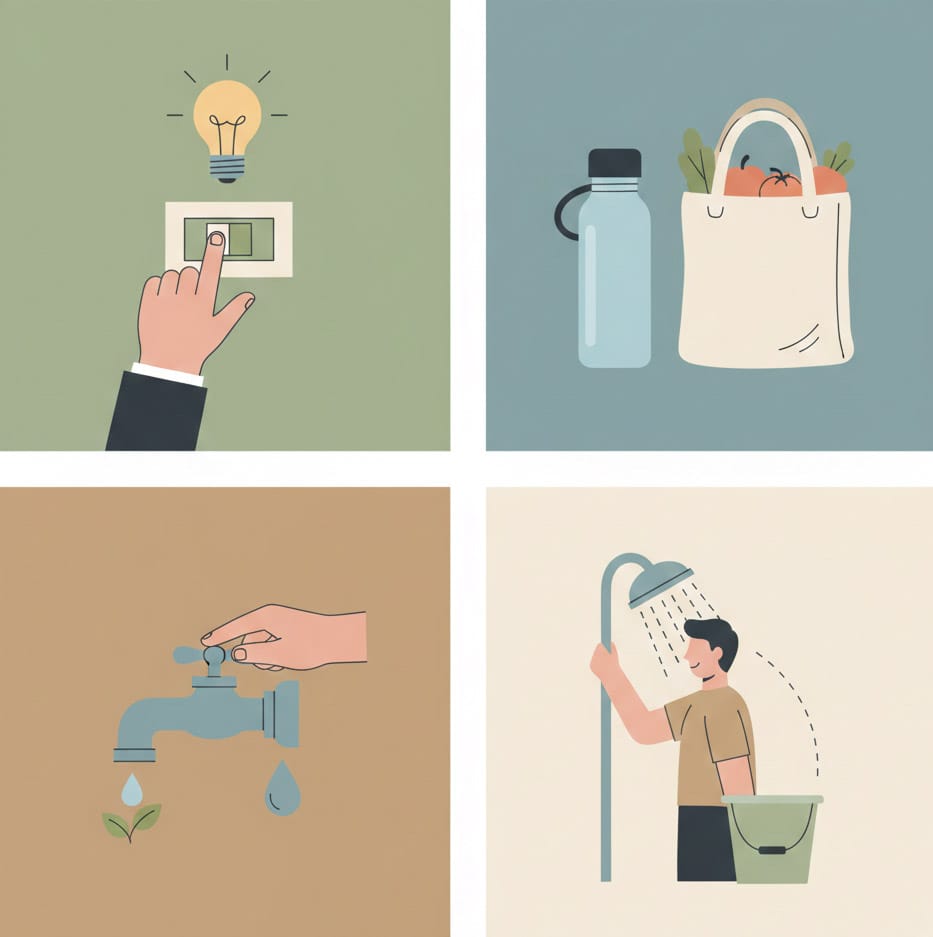
Energy use is a good example. Turning off lights when leaving a room or unplugging devices that remain on standby reduces energy waste without changing comfort. Over time, these small actions lower overall consumption.
Daily shopping habits matter as well. Choosing reusable bags, buying only what is needed, and avoiding unnecessary packaging helps reduce waste without limiting choice. Many people find that adopting a few simple zero-waste habits is enough to make a noticeable difference.
Water usage follows the same pattern. Shorter showers, turning off the tap while brushing teeth, or fixing small leaks can significantly reduce water consumption over the long term.
Food waste is another area where small habits matter. Planning meals, storing food properly, and using leftovers effectively reduces waste without requiring a strict diet or lifestyle change.
The Science Behind Habit-Based Sustainability
Research on habit formation shows that behaviors become automatic through repetition, not motivation. Once a habit is formed, it requires little conscious effort to maintain. This is why small, consistent actions outperform large, occasional efforts.
Environmental impact follows the same principle. A single major action may feel meaningful, but consistent daily choices shape long-term outcomes. Sustainable habits align better with how people naturally behave, making them more effective over time.
Importantly, habit-based sustainability avoids guilt. Instead of focusing on what people fail to do, it emphasizes what they can realistically do every day. This approach leads to better adoption and longer-lasting change.
Why Sustainable Living Is Easier Than It Looks
Sustainable living becomes easier when it stops being a goal and starts being a routine. When habits fit naturally into daily life, they no longer feel like sacrifices.
The idea is not to live perfectly, but to live consciously. Small decisions, repeated consistently, create progress without pressure. Sustainability does not require a complete lifestyle overhaul. It simply requires paying attention to everyday choices and making small improvements where possible.
Over time, these habits shape behavior, reduce waste, and lower environmental impact without demanding constant effort.

Conclusion
Big green promises often fail because they rely on motivation alone. Small daily habits succeed because they rely on routine.
Sustainable living does not start with dramatic changes. It starts with simple actions that are easy to repeat. When sustainability becomes part of everyday life, its impact grows naturally and consistently.
Progress matters more than perfection. And in the long run, small habits quietly do the most work.