






Some people just ‘get’ things faster, or make smarter choices without breaking a sweat? It’s not magic, and it’s rarely about being inherently smarter. Often, it comes down to how they think – their hidden tools for understanding the world. These tools? We call them mental models. Think of them as shortcuts or frameworks your brain uses to make sense of complex situations, solve problems, and make decisions more effectively. They’re not just for CEOs or academics; these are practical ways of thinking that anyone can learn and apply to daily life.
In a world drowning in information and endless choices, having a few reliable mental models in your toolkit can be a great help. They help cut through the noise, spot patterns, and anticipate outcomes, giving you an edge if you are planning your next career move, deciding on a big purchase, or just navigating a tricky conversation. This isn’t about memorizing jargon; it’s about adopting smarter ways to approach challenges, making your everyday thinking sharper and more strategic.
TL;DR
- Mental models are like cognitive frameworks that simplify complex ideas.
- They act as powerful decision heuristics for better choices.
- Using them helps improve your problem solving techniques and everyday clarity.
- Key models include First Principles, Inversion, and the Circle of Competence.
- Applying these tools regularly boosts strategic thinking in all areas of life.
- They’re practical, learnable, and for everyone, not just experts.
- Cut through confusion and make more informed, confident decisions.
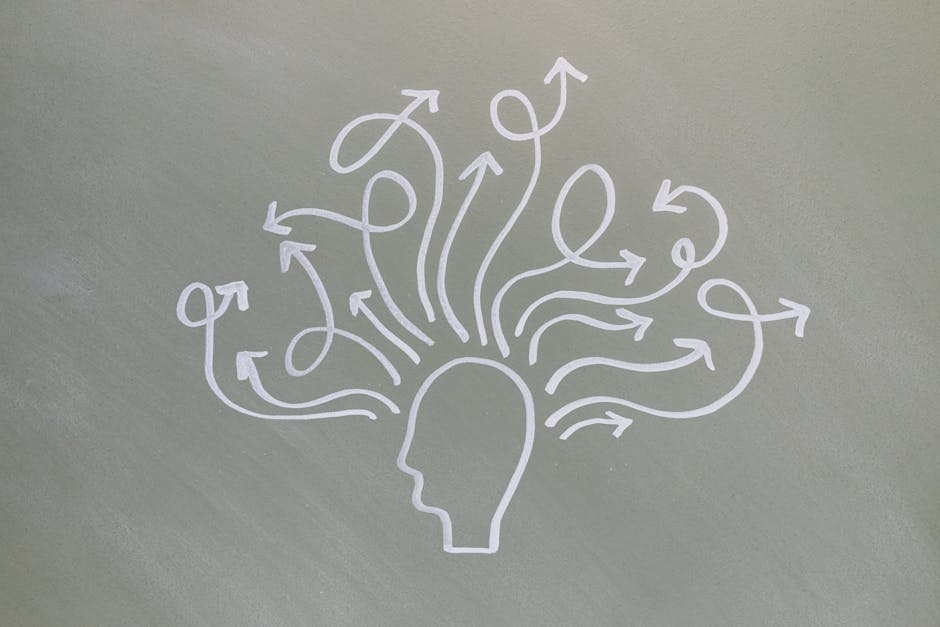
What Exactly Are Mental Models?
At their core, mental models are simply representations of how the world works. They’re like miniature theories in our heads about nearly everything. For example, a simple mental model might be ‘supply and demand’ – a basic understanding that if something is rare (low supply) and many people want it (high demand), its price will likely go up. You don’t need an economics degree to use this basic
Another common one is ’cause and effect’. We intuitively use this when we notice that touching a hot stove causes a burn. We’ve built a simple model in our mind that connects the action to the consequence, helping us avoid similar situations in the future. These aren’t always about big, complex systems; they can be about how people interact, how projects unfold, or even how your own habits work. They help you predict, interpret, and act.
Why Mental Models Matter for Everyone
So why should you care about these abstract frameworks? Because they fundamentally improve how you think, decide, and act. Instead of reacting impulsively or getting overwhelmed, mental models give you a structured way to analyze situations. They help you:
- Pro-Tip: See problems from different angles, revealing solutions you might otherwise miss.
- Common Pitfall: Avoid getting stuck in a single way of thinking, which often leads to repetitive mistakes.
- Pro-Tip: Simplify complex situations into manageable parts, making it easier to grasp the big picture.
- Common Pitfall: Prevent overthinking or paralysis by analysis, as they offer clear points of focus.
They act as powerful
Common & Useful Mental Models to Start With
You don’t need to learn hundreds of models overnight. Start with a few powerful ones and see how they change your perspective:
- First Principles Thinking: Instead of reasoning by analogy (doing what others do or what’s always been done), you break a problem down to its most fundamental truths – the things you know are absolutely true and cannot be broken down further. Then, you build your solution back up from there. It’s about questioning assumptions and innovating from scratch, rather than merely improving on what exists.
- Pro-Tip: Ask ‘Why?’ five times to dig past surface-level issues and uncover core problems or solutions.
- Inversion: Instead of asking how to achieve a good outcome, ask how to avoid a bad one. If you want to build a successful business, think about all the ways a business fails, and then avoid those pitfalls. This often reveals blind spots and helps you anticipate problems before they occur.
- Common Pitfall: Focusing only on what to do, without considering what not to do, which can lead to preventable failures.
- Circle of Competence: Understand what you know well and what you don’t. Stay within your circle, or if you must venture outside, do so with extreme caution, humility, and a clear plan to learn. This prevents overconfidence and encourages realistic self-assessment.
- Pro-Tip: Regularly define the boundaries of your knowledge in different areas to avoid making decisions outside your expertise.
- Occam’s Razor: When faced with competing explanations, the simplest explanation that fits the facts is usually the correct one. This doesn’t mean the simplest answer is always right, but it’s a good starting point for analysis and avoids unnecessary complexity.
- Pro-Tip: After considering complex options, pause and ask yourself if there’s a simpler, equally plausible explanation.
Real-World Impact: Thinking Smarter Every Day
The beauty of mental models is their versatility. They’re not just for business strategy; they’re powerful
Or perhaps you’re planning your personal goals. Using ‘First Principles Thinking’ can help you clarify why you want a goal, rather than just copying what others pursue. For managing your personal productivity, applying a ‘Pareto Principle’ mental model (the 80/20 rule) can help you identify the 20% of tasks that yield 80% of the results, making your approach to something like strategic time blocking much more effective. This isn’t about being rigid, but about having a clearer lens through which to view your challenges and opportunities.
They help you anticipate consequences, understand motivations (both your own and others’), and make more robust plans. Whether it’s a difficult conversation with a family member, evaluating an investment opportunity, or simply deciding what to focus on in your week, these frameworks offer a structured path forward.
Common Misconceptions
- Mental models are complex theories only for experts. They are simple cognitive frameworks that anyone can learn and use.
- Learning mental models means memorizing a long list. It’s about understanding a few core principles and applying them creatively.
- These models provide instant, perfect answers. They are tools to aid thinking, not magic solutions that bypass critical thought.
- You need to apply a different model to every single situation. Often, one or two well-understood models can be incredibly versatile.
Next Steps
Ready to integrate mental models into your thinking? Here’s how to start:
- Start Small: Pick one or two models that resonate with you from this post (like First Principles or Inversion) and consciously try to apply them to a situation this week.
- Observe: Pay attention to how people around you make decisions. Can you identify any mental models they might be using (or lacking)?
- Reflect: After making a decision or solving a problem, take a moment to consider if a different mental model could have offered a better perspective or outcome.
- Read More: There are many great resources (books, articles) that delve deeper into various mental models. Don’t feel overwhelmed, just pick one and learn.
- Practice Consistently: Like any skill, strategic thinking through mental models gets stronger with regular practice. Make it a habit to question your assumptions and look for underlying frameworks.